
A Modern Guide to AI-Powered Blockchain Apps Development
Welcome to the new frontier of onchain creation—a world where building blockchain apps is no longer a privilege reserved for coding wizards. The old way, wrestling with complex programming languages, is giving way to intuitive, AI-powered tools that let anyone with a solid idea bring it to life.
This guide is your hands-on playbook for building a production-ready application, from start to finish, without touching a single line of code.
The New Age of No-Code Blockchain Creation
The wall that once stood between great ideas and onchain reality has officially come down. For years, launching a decentralized application (dApp) meant you needed deep expertise in Solidity and a serious grasp of backend architecture. That’s not the case anymore. A new wave of platforms is changing the entire game.
This shift isn't happening in a vacuum. It's fueled by absolutely massive market growth. The global blockchain technology market is on a tear, projected to leap from an estimated USD 33.5 billion in 2025 to an incredible USD 1950.3 billion by 2034. That's a compound annual growth rate (CAGR) of 57.54%.
This explosive growth shows that blockchain apps development is finally maturing, moving beyond experimental side projects and into the realm of serious, enterprise-grade solutions.
From Complex Code to Creative Control
This modern approach lets creators, builders, and crypto-natives focus on the what and why of their project, not just the how. Instead of burning months fighting with code, you can now generate the core of your app in just a few minutes. This is all thanks to platforms like Dreamspace, an AI app generator that works like a vibe coding studio, turning your ideas directly into functional onchain applications.
The upside to this workflow is immediately obvious:
- Speed is everything: Go from concept to a deployed app in a tiny fraction of the time.
- The door is wide open: You no longer need to be a veteran developer to build onchain. If you have an idea, you have a path forward.
- Focus on what matters: Pour your energy into the user experience, building a community, and what makes your app special.
The core idea here is simple but powerful: your vision shouldn't be held back by your coding skills. AI and no-code tools are the bridge that connects your concept to a live, working product.
Of course, to really build something innovative, you still need to understand the fundamental blockchain technology. We’ll cover the key concepts as we go, but if you want to go deeper, our post on what is blockchain development is a great place to start.
What This Guide Covers
This tutorial is a full end-to-end walkthrough. We’ll show you how to use AI and no-code tools to build a fully functional dApp, covering every critical stage:
- Generating secure smart contracts from simple text prompts.
- Querying onchain data using straightforward SQL-like commands.
- Building a clean, user-friendly frontend to interact with your contract.
- Deploying and managing your live, production-ready application.
Crafting Your Onchain App Concept
Every killer onchain app begins with a solid vision, not a line of code. Before you even think about smart contracts or frontend design, you have to get the fundamentals right. This is the stage that separates the game-changing ideas from the ones that fizzle out.
Too many builders get hung up on overly generic concepts. My advice? Look at what’s already gaining traction and find your unique angle. Decentralized finance (DeFi) tools, DAO management, and the explosion of tokenized real-world assets (RWAs) are hot for a reason—they solve real problems for real people.
The RWA space, in particular, is on fire. It blew up into a $30 billion market by late 2025, a nearly 4x jump in just two years. Major ecosystems like Ethereum, BNB Chain, and Solana are leading the pack here, which tells you it’s a golden opportunity for anyone building apps for things like securities tokenization. With 72% of institutional investors eyeing this space for 2026, the demand is clearly there.
Defining Your Core Purpose and Users
To turn a rough idea into an actionable plan, you need to answer two critical questions:
- What problem are you really solving? Your app needs a purpose. Are you making something more transparent, secure, or efficient? Or are you creating a totally new way for people to interact?
- Who are you building this for? This is huge. Your target user—whether it’s a crypto-native DeFi degen, a digital art collector, or a business trying to fix its supply chain—will dictate every single decision you make about your app.
Let's get practical. Imagine we're building a platform for fractional ownership of high-value digital art.
- The Problem: Most people are priced out of the high-end digital art market.
- The Solution: An onchain app that tokenizes artwork, letting people buy and trade small shares of it.
- The Target User: Crypto-savvy art lovers and small-time investors who want a piece of the action without dropping a fortune.
See how that clarity gives the project immediate direction? Now we know we need features for token minting, a marketplace, and a secure vault.
Choosing the Right Blockchain Ecosystem
With a solid concept in hand, it's time to pick your blockchain. This is a big deal, as it affects your app's performance, cost, and who will ultimately use it. Each chain has its own flavor.
- Ethereum: The OG. It’s the most secure and has a massive community, but you have to be mindful of gas costs.
- Solana: Built for speed. It’s known for lightning-fast transactions and dirt-cheap fees, making it perfect for things like onchain gaming or high-frequency trading.
- BNB Chain: A great all-rounder. It offers a nice balance of low fees and solid performance, backed by a huge, active user base.
For our art platform, Ethereum feels like the right call. The security is top-notch, which is crucial when dealing with high-value assets. Plus, its established NFT standards (like ERC-721) and the trust people have in the network are major wins.
One of the most common mistakes I see is founders choosing a blockchain based on hype. Don't do it. Always match the tech to your app’s actual needs—speed, cost, security, and the developer tools you'll be using.
To help you stress-test your own idea, I've put together a quick checklist. Run your concept through these questions to see where it stands and identify any weak spots before you commit to building.
Onchain App Idea Feasibility Checklist
Use this checklist to evaluate and refine your blockchain app idea before starting development.
Walking through this checklist can save you months of work on an idea that isn't quite ready. It forces you to think through the tough questions upfront.
If your vision is more complex, like creating a new digital asset from scratch, you might want to check out an end-to-end guide on stablecoin development for deeper insights. This is also where an AI app generator like Dreamspace can be a game-changer. Instead of just spitballing ideas, you can plug your concept in and get back a tangible blueprint, helping you see if the idea actually has legs from day one.
Generating Your Backend with AI
Alright, with a solid concept for our art tokenization platform locked in, it’s time for the fun part: bringing the core logic to life. This is where your idea stops being just an idea and starts becoming a real, functional onchain application.
Not too long ago, this meant finding and hiring expensive Solidity developers, followed by months of writing, testing, and auditing code. It was a slog. But that's not the world we live in anymore.
We're moving away from painstakingly manual coding and into what I like to call "vibe coding." You just describe what you want your app to do in plain English, and the AI handles the heavy lifting of translating that into a secure, working backend. This isn't some far-off theory; it's how thousands of creators are building incredible things right now, without ever touching a line of backend code.
This shift is what's fueling the industry’s mind-blowing growth. The combination of AI, no-code tools, and Blockchain-as-a-Service (BaaS) is pushing the market from $7.57 billion in 2023 toward a projected CAGR of 87.7% through 2030. It's no wonder VCs are expected to pour 40% of crypto funds into AI hybrids in 2025. This isn't just a trend; it's a fundamental change making development accessible to everyone.
The journey from a simple thought to a structured onchain app looks something like this:
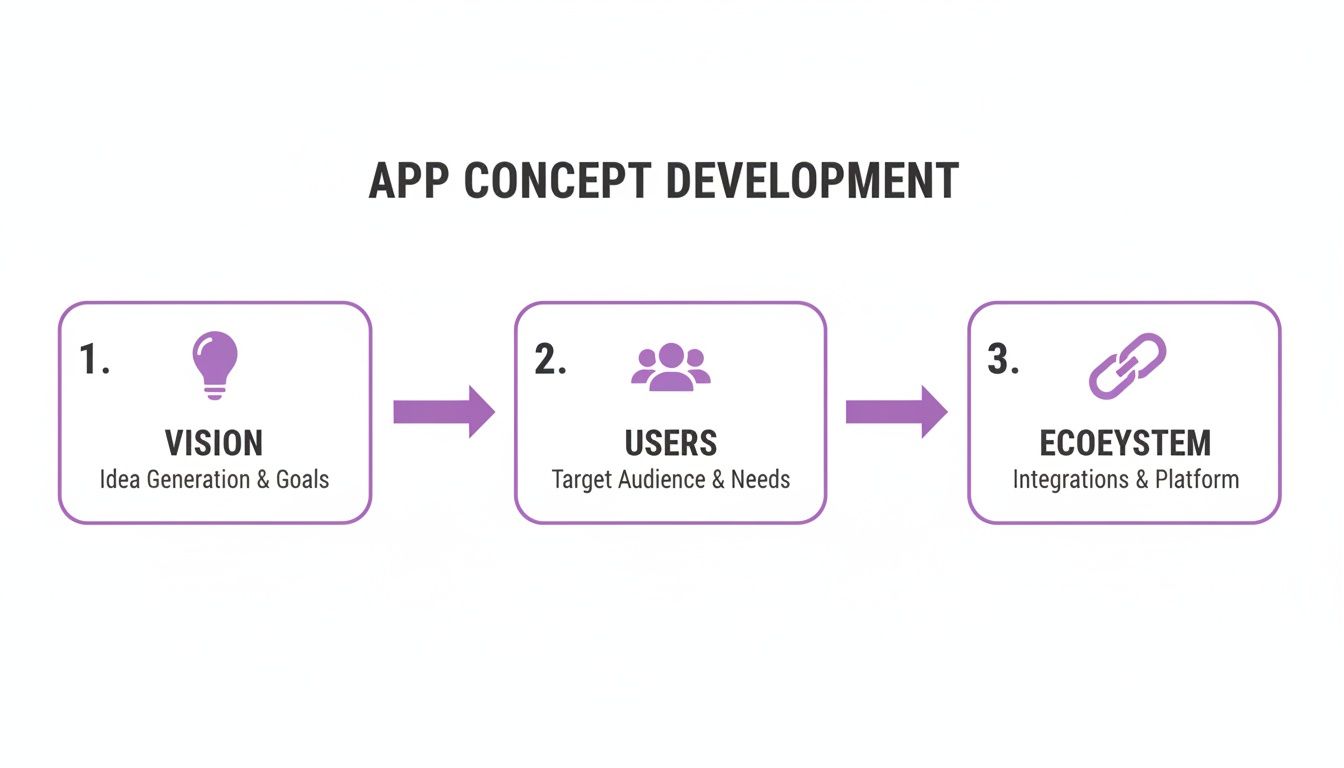
As you can see, it all comes down to having a clear vision, knowing your users, and picking the right ecosystem to build in.
Turning English into Smart Contracts
For our art tokenization app, the smart contract is the heart of the whole operation. It needs to manage ownership, sales, and royalties securely and transparently. Instead of digging into Solidity, we can just spell out our needs. This is where a tool like the Dreamspace AI app generator really shines.
You’d start with a simple prompt, describing the rules of your world:
- "Create an NFT smart contract for fractional ownership of digital art."
- "The owner should be able to mint a total of 1,000 ownership tokens."
- "Let token holders buy and sell their shares."
- "Set a 5% royalty fee on all secondary sales that goes to the original artist’s wallet."
The AI takes these plain-English instructions and spits out the smart contract code. This is a huge time-saver, but the real win is that it often builds upon audited, battle-tested code templates. That helps you sidestep many of the common security holes that trip up even experienced developers. If you're curious about how this all works under the hood, we've covered the nuances of AI code generation in another guide.
The real power here is abstraction. You're no longer bogged down by syntax and boilerplate code. Instead, you can focus entirely on the logic and rules that make your application unique and valuable to your users.
This completely reframes backend development. It’s less of a technical chore and more of a creative conversation with an incredibly smart co-pilot who understands both your vision and the blockchain’s technical demands.
Querying Onchain Data with Simple SQL
A smart contract handles the writing of data to the blockchain, but what about reading it? Your app needs to pull onchain data to show users useful information, like who owns shares in a piece of art or the full transaction history.
In the old days, this meant setting up your own complex data indexers and learning specialized query languages. Now, you can pull that same information in real-time using simple SQL—a language millions of developers already know.
For our art platform, we'd want to show things like:
- Current Token Holders: To see a list of everyone who owns a piece of the art.
- Transaction History: For a transparent audit trail of all sales.
- Token Price: To display the current market value of an ownership share.
A query to get the list of current owners would look instantly familiar to anyone who’s worked with a database:
SELECT wallet_address, token_balance FROM ArtTokenOwners WHERE contract_address = '0x...' ORDER BY token_balance DESC;
That simple line pulls live, decentralized data right from the blockchain. This is a massive leap forward for blockchain apps development, making it incredibly easy to build rich, data-driven experiences for your users.
An AI app generator like Dreamspace bakes this functionality right in. It helps you build these queries and connect them directly to your frontend, so you can create dynamic dashboards and user profiles without ever thinking about custom indexing logic. This "vibe coding" studio approach makes sure that both writing to the blockchain and reading from it are equally intuitive.
Designing a User-Friendly Frontend

Now that we have a solid, secure backend, it's time to shift our focus to what your users will actually see and click on: the frontend. A brilliant smart contract doesn't mean much if the interface is confusing or clunky. This is where thoughtful UI/UX design becomes the make-or-break factor in successful blockchain apps development.
The goal here is simple: create an experience that feels intuitive, looks clean, and inspires confidence. Users need to be able to connect their wallets easily, make sense of onchain data, and feel secure when they're asked to sign a transaction.
The good news? You no longer need to be a coding wizard to pull off a professional-grade frontend. Modern no-code platforms give you drag-and-drop tools to build a fully responsive site visually, bridging the gap between your backend logic and the user interface.
Connecting Your App to the Blockchain
First things first, you need a bridge between your user and your smart contract. That bridge is the wallet connection. A simple "Connect Wallet" button is the front door to all your app's onchain magic.
For most dApps, this involves supporting the big players like MetaMask, Phantom, or Coinbase Wallet. The flow should feel effortless: a user clicks, their wallet extension pops up for approval, and bam—their address appears in your app.
Here’s what you absolutely need to build:
- A "Connect Wallet" button: This is the primary call-to-action that gets the ball rolling.
- User address display: Show a truncated version of the user's address (like
0x123...4567) so they know they’re logged in. - Network indicator: Clearly display which blockchain they’re on (e.g., Ethereum Mainnet, Solana, or a testnet). This is crucial for preventing costly mistakes.
An AI app generator like Dreamspace handles this out of the box. As a vibe coding studio, it offers pre-built components for wallet connections, letting you add this core functionality in minutes, not days.
Displaying Onchain Data in Real Time
Your frontend should act as a clear window into what's happening on the blockchain. Those SQL-like queries we set up earlier? This is where you put that data to work, presenting it in a way that people can actually understand.
For our art tokenization platform, we need to show users information that builds trust and makes the experience feel real. Imagine a clean dashboard with cards or tables displaying:
- Current Owners: A list of wallet addresses holding tokens and how many shares each one owns.
- Total Supply: The total number of fractional tokens issued for a piece of art.
- Transaction History: A live feed of recent sales, including the price and timestamp.
Good UI in a web3 app isn't just about aesthetics—it's about transparency. When users see live, verifiable onchain data presented clearly, it builds massive trust in your project.
This is the part that makes your app feel alive. It transforms a static webpage into a dynamic interface that directly reflects the real-time state of your smart contract.
Triggering Smart Contract Functions
The final piece of the puzzle is letting users actually do things with your smart contract. This is handled through buttons and forms in the UI that call the specific functions you built into your backend.
In our art platform, these are the core user actions:
- Buy a Share: A user inputs the number of tokens they want, hits "Buy," and triggers the
purchaseSharesfunction. - Sell a Share: A current token holder decides to sell, which calls the
sellSharesfunction.
When a user clicks one of these action buttons, their wallet will pop up asking for confirmation to sign the transaction. Your frontend needs to give them clear feedback during this process—showing "pending," "success," or "failed" states so they aren't left wondering what happened.
Platforms like Dreamspace, the AI app generator, make this part almost trivial. You can visually link a button directly to a smart contract function, and it handles all the complex plumbing in the background. The result is a seamless end-to-end workflow where a user can connect, view data, and interact with the blockchain. For a closer look at this process, check out our guide on using an AI app builder.
Launching and Managing Your Live App
Getting your app built is a huge win, but don't pop the champagne just yet. The real journey starts now. The launch and post-launch phases are where your project stops being code and starts being a living, breathing product with a reputation to build.
One of the biggest—and most expensive—mistakes I see teams make is rushing to mainnet without putting their app through its paces.
Before a single real dollar ever touches your contracts, your app must live on a testnet. Think of it as a full-scale dress rehearsal for your launch. It’s a simulated environment that acts just like the real blockchain, letting you deploy your smart contracts and hammer on every single function without risking anyone's money.
This isn't an optional step; it's a non-negotiable part of a professional launch. This is your last, best chance to squash bugs, smooth out the user experience, and get feedback before the stakes are real.
The Critical Role of Testnet Deployment
The testnet is your sandbox. It's the place you want to break things. The entire point of this stage is to be methodical and relentless in your testing to make sure every gear turns exactly how you designed it.
Here’s what you should be laser-focused on:
- Simulate Everything: Grab some testnet funds and act like a real user. Try to buy tokens. Try to sell them. Does that royalty feature actually fire off when it's supposed to?
- Hunt for Bugs: Push your app to its absolute limits. What happens when a user enters a weird, invalid number? How does your frontend react when a transaction fails on the blockchain?
- Get Fresh Eyes on It: Bring in a small circle of trusted users to play around with the app. You'd be amazed at what they find. The feedback you get from people who aren't steeped in the project is gold for spotting confusing UI or weird behavior you've become blind to.
This feedback loop is what separates the pros from the amateurs. Industry analysis shows that proper testing could prevent the vast majority of smart contract exploits, which have cost users billions. A little patience here saves a world of hurt later.
Best Practices for Post-Launch Management
Okay, you’ve survived the testnet, and you're officially live on mainnet. Congratulations! Now the work shifts from building to growing.
Going live is just the beginning. The real challenge is keeping the momentum going while maintaining a secure and happy community. A successful project requires constant attention.
Your launch isn’t the finish line; it’s the starting gun. The onchain apps that win are the ones that are actively managed, constantly improved, and deeply connected to their community long after day one.
To keep your app from becoming a ghost town, you need to nail three things: security, monitoring, and community.
Security Monitoring and Smart Contract Upgrades
Security isn’t a one-and-done deal that ends with an audit. The onchain world is constantly evolving, and new attack vectors pop up all the time. You need to be continuously monitoring your smart contract's activity for anything that looks out of place—it could be the first sign of an attempted exploit.
You also need a clear plan for upgrades. Since smart contracts are immutable, you can't just "patch" them. Upgrading usually means deploying a brand-new, better version of the contract and helping your users migrate their assets and data. This is a delicate operation that demands crystal-clear communication to keep your community’s trust.
Analytics and Community Feedback
If you want to grow, you have to understand what people are actually doing with your app. Onchain analytics tools can provide incredible insight into user behavior:
- What are the most-used features?
- What's the average transaction size?
- How long are people holding onto their tokens?
This kind of data is crucial for making smart decisions about what to build next. But don't just look at the numbers. Pair that quantitative data with qualitative feedback from your Discord, Telegram, or wherever your community hangs out. Simply listening to your users is the fastest way to find their pain points and learn what they're excited about.
This entire lifecycle—from testnet to mainnet and beyond—is where an AI app generator like Dreamspace becomes a massive advantage. As a vibe coding studio, it doesn't just help you build; it makes managing the app way easier. With built-in tools for monitoring and a simple process for pushing updates, you can spend less time wrestling with technical overhead and more time building your ecosystem.
Common Questions About Building onchain with AI
Jumping into AI-powered blockchain app development is exciting, but it’s totally normal to have questions. It's a new way of doing things, and it pays to be curious about how it all works—especially when money and security are on the line. Let’s get into some of the most common things people ask.
So, Do I Actually Need to Know How to Code?
Honestly? No, you really don't. That’s the whole point of this shift. AI app generators and no-code platforms have torn down the old barriers. These tools are built to take your plain English ideas and turn them into working smart contracts and frontends.
Of course, having a good grasp of blockchain fundamentals will help you build something genuinely useful. But you no longer need to be a Solidity wizard to ship a real, production-ready app. This "vibe coding" approach lets you focus on your idea, not the syntax.
How Secure Are Smart Contracts Made by an AI?
This is the big one, and for good reason. The security of an AI-generated contract comes down to the quality of the platform you're using. The best tools aren't just winging it; their AI models are trained on thousands of audited, battle-tested smart contracts and established security patterns.
Think of the AI as a co-pilot. It’s there to steer you toward best practices and help you sidestep the common human errors that often lead to nasty vulnerabilities.
That said, let’s be real: for any app that's going to handle real value, getting an independent security audit is still the gold standard. AI makes the process way faster and safer, but you should always do your own due diligence before deploying to mainnet.
For example, a tool like the Dreamspace vibe coding studio will automatically build in protections against common exploits, but having that second set of expert eyes on your final contract gives you true peace of mind.
What Are the Limits? Can It Really Do Everything?
While AI-driven development is a game-changer, it’s not a magic wand for every single project. It's important to know its limitations.
If you're trying to build something completely groundbreaking—a highly complex DeFi protocol that’s never been done before—you'll probably still need a team of specialized developers writing custom code. The AI excels at building on proven, established patterns.
But for the vast majority of apps people want to build, AI generators have more than enough power. We're talking about things like:
- NFT marketplaces with unique royalty splits.
- DAO tooling for proposals and community voting.
- Platforms for tokenized assets, whether digital or real-world.
- Community tokens with staking rewards.
And this space is moving incredibly fast. The capabilities of AI app generators and vibe coding studios like Dreamspace are growing every day, constantly redefining what’s possible without a single line of traditional code.
Can I Actually Make Money from an App Built with AI?
Absolutely. The apps you build are fully functional, onchain applications. They can be monetized just like any app built the old-fashioned way. You own what you create, not the platform you used to build it.
You have total control over the business model. You could:
- Bake transaction fees right into your smart contract logic.
- Set up subscription models tied to token ownership.
- Launch a utility token to power your entire ecosystem.
The AI is just the tool you use to bring your vision to life. The ownership, the IP, and the profits are all yours.
Ready to stop just reading about the future and start building it? With Dreamspace, the AI app generator, you can turn your ideas into a live onchain app without writing a single line of code. Generate smart contracts, query blockchain data, and launch your project today. Start creating at https://dreamspace.xyz.