
The 12 Best Web Building Software Platforms for 2026
The landscape of web creation has expanded far beyond traditional website builders. In 2024, the best web building software now encompasses everything from AI-driven app generators to specialized onchain studios designed for crypto and blockchain projects. The right platform is no longer just about aesthetics; it's about finding a toolset that aligns with your specific technical needs, whether you're a developer launching a decentralized application (dApp), a founder scaling an e-commerce business, or a creator building a unique digital presence.
This guide provides a comprehensive, feature-by-feature breakdown of the top 12 platforms available today. We move past the marketing copy to deliver an honest assessment of what each tool truly offers. You'll gain practical insights into critical capabilities that matter now:
- AI and No-Code Generation: How effectively can you use artificial intelligence to design, code, and launch your project?
- Onchain Integration: What level of support is available for smart contracts, wallet connections, and querying blockchain data?
- Developer Workflows: How do these platforms cater to developers with features for custom code, API access, and secure hosting?
We will explore everything from established giants like WordPress to innovative newcomers and specialized tools like Dreamspace, a vibe coding studio and AI app generator designed for modern projects. Each analysis includes real usage experience, potential limitations, and direct links to help you evaluate your options efficiently. This resource is designed to cut through the noise and help you select the ideal software to bring your specific vision to life, whether it's a simple portfolio or a complex, onchain application.
1. Dreamspace
Best for: AI-driven Web3 application development and rapid prototyping.
Dreamspace stands out as our top choice for the best web building software, particularly for creators in the Web3 space. It redefines development with an AI-first, no-code approach marketed as "vibe coding," allowing users to generate complete onchain applications, smart contracts, and even complex blockchain SQL queries simply by describing their needs in a chat interface. This fundamentally lowers the barrier to entry, empowering both non-coders and seasoned blockchain developers to bring ideas to life in minutes rather than weeks.
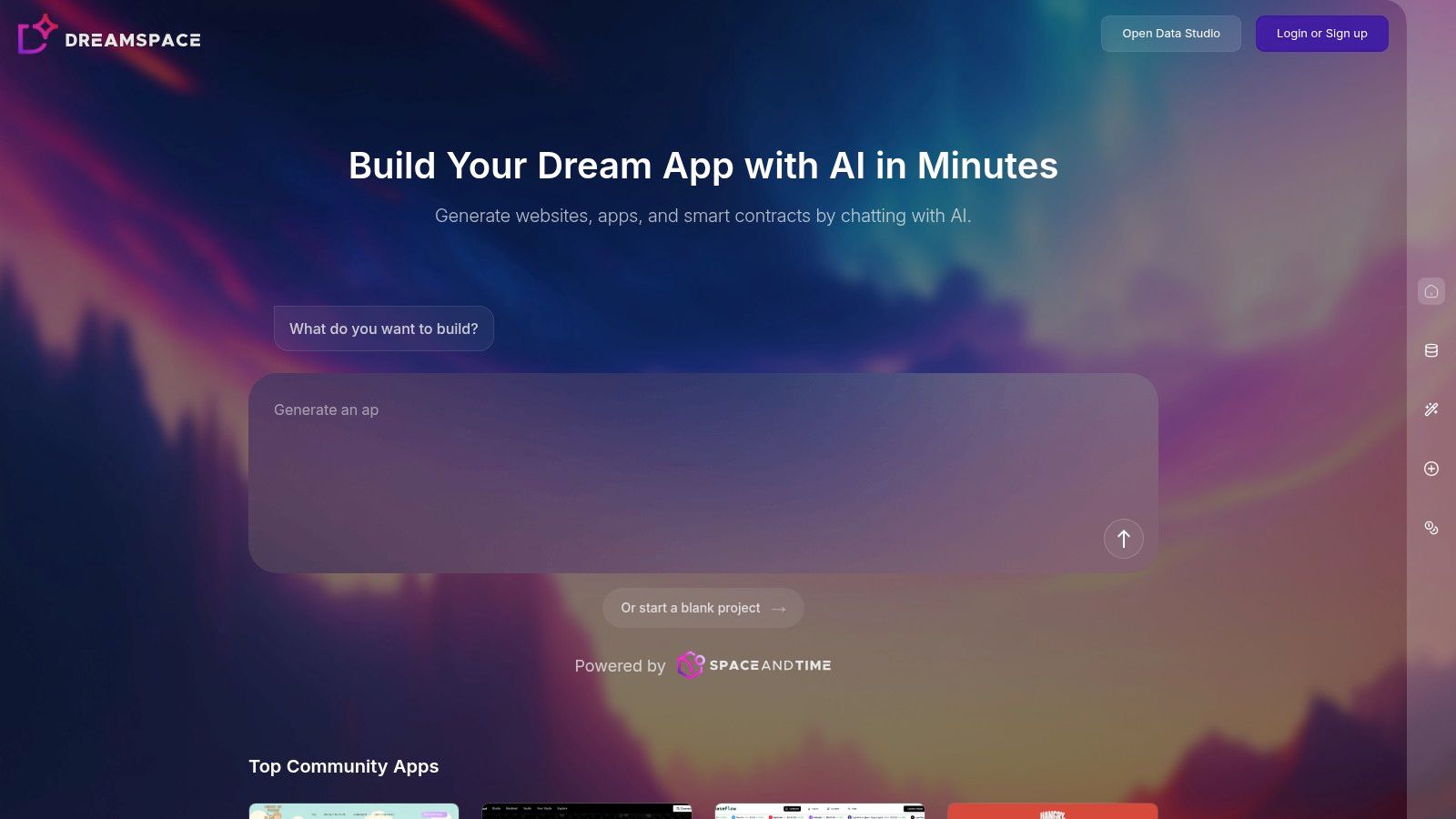
Unlike generic website builders retrofitted for crypto, Dreamspace is purpose-built for the onchain ecosystem. Its entire toolkit is optimized for creating decentralized applications (dApps), from token-gated platforms and DAO governance tools to analytics dashboards and DEX interfaces. This focus makes it a uniquely powerful AI app generator for the specific challenges and workflows of Web3.
Key Features & Use Cases
Dreamspace's strength lies in its specialized, AI-powered features that directly address the needs of modern onchain builders.
- AI-Powered Generation: The core of the platform is its conversational AI. Users can generate frontend components, backend logic, and Solidity smart contracts from simple text prompts.
- Web3-Native Tooling: It includes integrated tools for querying blockchain data with SQL, which is a significant advantage for building data-rich applications like analytics trackers or portfolio management tools.
- Community Templates: For those seeking inspiration or a faster starting point, Dreamspace showcases community-built projects like BaseChat and DexDream. These serve as excellent, reproducible templates for new users. As a leading vibe coding studio, it's an ideal environment for rapid iteration.
Practical Considerations
While Dreamspace excels at speed and accessibility, users should remain diligent. Pricing information is not publicly listed on the website, requiring signup to view costs or access plans. Furthermore, any AI-generated smart contract must undergo a thorough human review and professional security audit before being deployed to a production environment to mitigate potential risks. This is a standard best practice for all smart contract development, not a limitation unique to Dreamspace.
To explore a deeper comparison of AI-driven development tools, you can read more about choosing the best AI app builder.
Website: dreamspace.xyz
2. Webflow
Webflow is a professional-grade visual website builder that offers the pixel-perfect control of a design tool like Figma with the power of a production-ready CMS and hosting platform. It stands out by generating clean, semantic HTML and CSS code as you design visually, making it a top choice for designers and developers who demand granular control without sacrificing efficiency. This makes it one of the best web building software options for creating high-fidelity, custom websites.
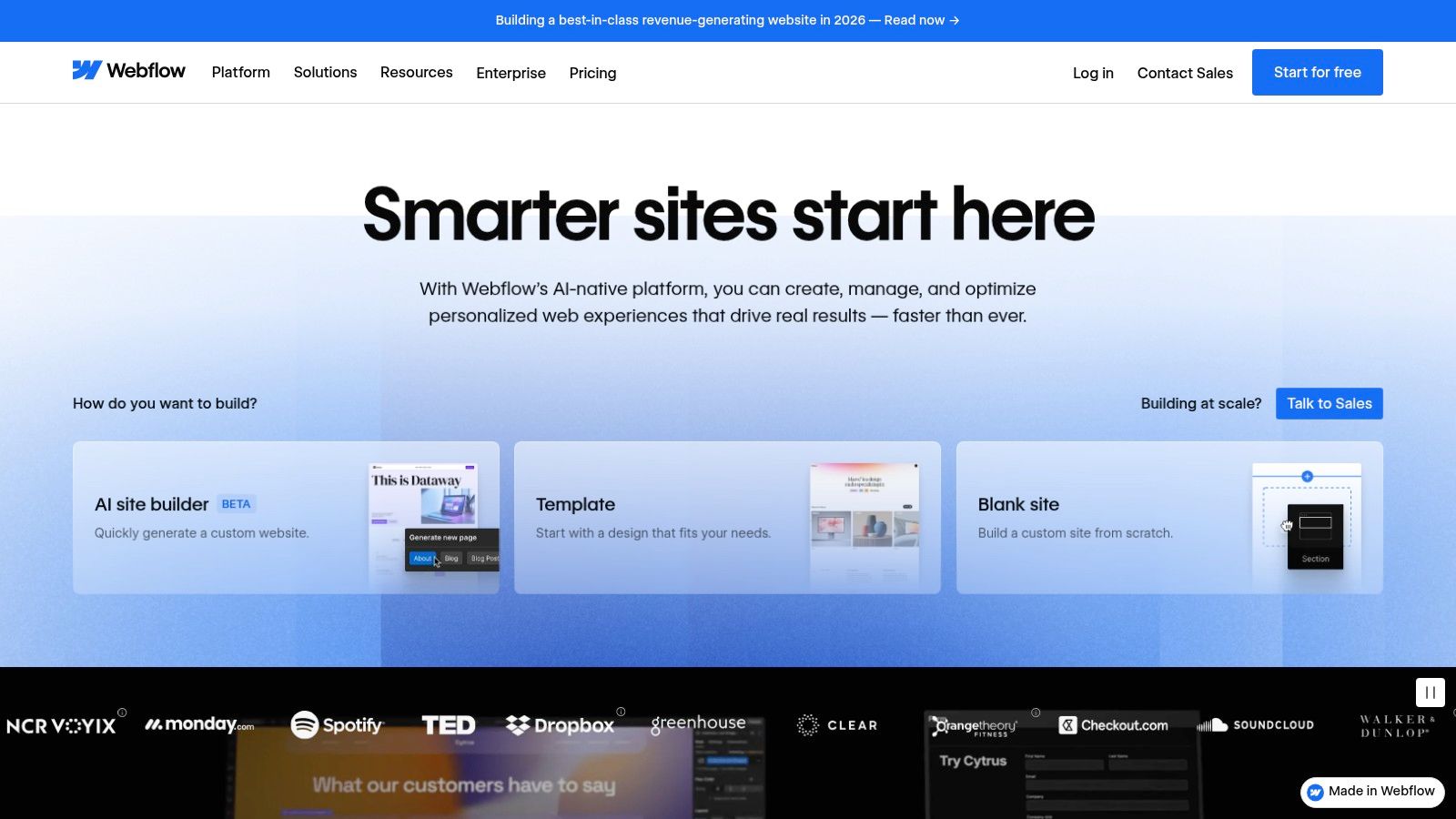
Unlike template-heavy builders, Webflow’s "designer" feels more like a visual representation of the web's box model, appealing directly to those with some understanding of front-end principles. Its powerful CMS allows for the creation of complex, dynamic content structures, perfect for blogs, portfolios, and marketing sites. However, its sophisticated interface presents a steeper learning curve than simpler tools. For projects requiring rapid AI-driven development or specialized on-chain features, a dedicated AI app generator like Dreamspace might offer a more streamlined path from idea to deployment.
Key Features & Considerations
- Visual Designer: Offers unmatched, direct control over HTML elements and CSS properties.
- Integrated CMS: Build and manage dynamic content collections without plugins.
- High-Performance Hosting: Leverages a global CDN for fast load times and reliability.
- Pricing Structure: Offers a free plan for starters. Paid plans begin at $14/month (billed annually) for basic sites and scale up based on traffic, features, and e-commerce needs.
Best For: Designers, front-end developers, and startups needing a custom, high-performance marketing website without writing code from scratch.
3. Wix
Wix is a dominant force in the website-building space, renowned for its user-friendly approach and all-in-one platform that caters to everyone from solo entrepreneurs to small businesses. It offers two primary creation paths: the traditional drag-and-drop editor for hands-on control and Wix ADI (Artificial Design Intelligence), which generates a site for you after answering a few questions. Its massive template library and extensive App Market make it a versatile choice for standard business sites, portfolios, and e-commerce stores.
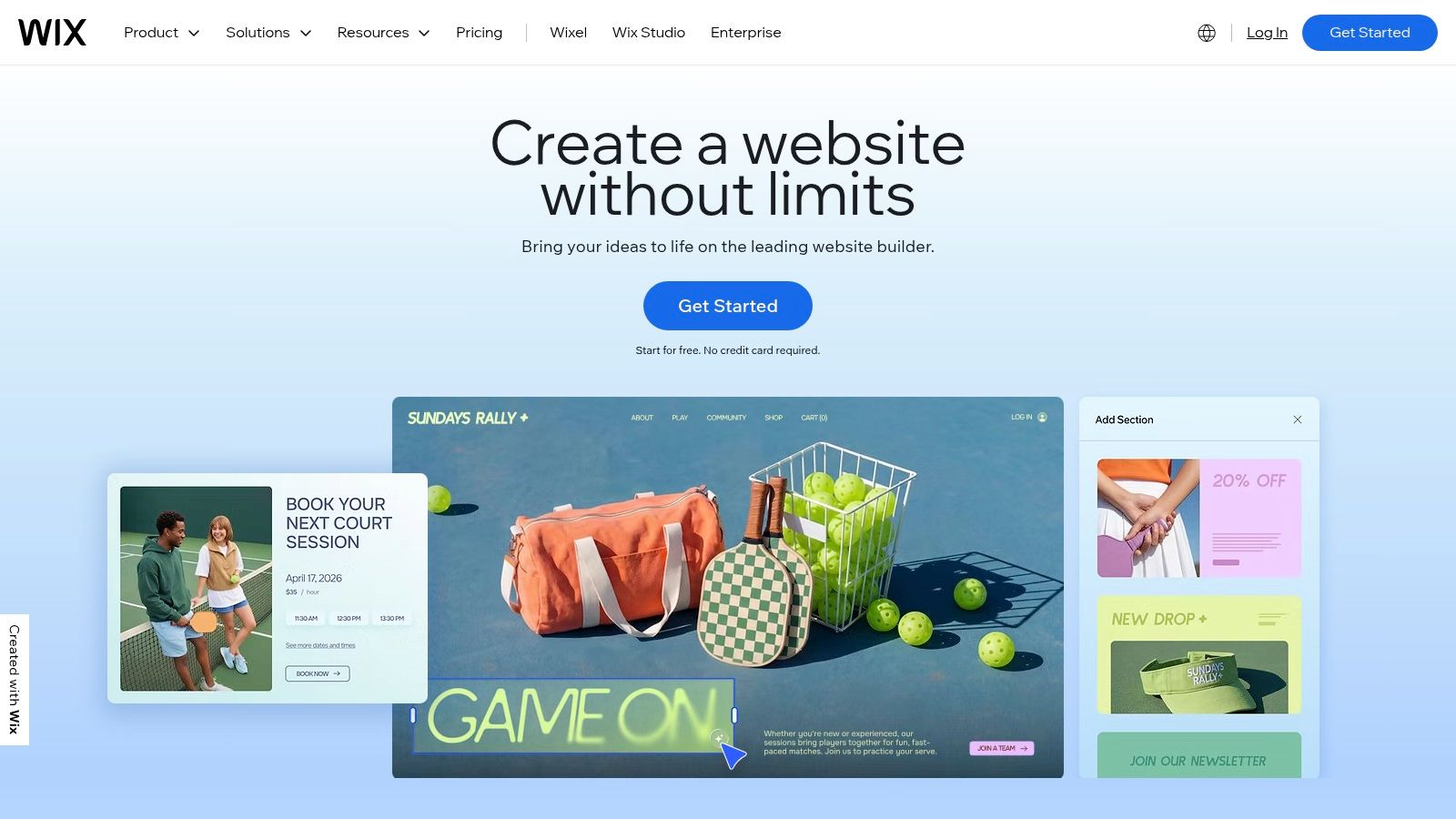
The platform excels at providing a guided, structured experience, abstracting away the complexities of web development. This makes it one of the best web building software options for users without technical skills. While Wix is a powerhouse for traditional web needs, developers seeking to build complex on-chain applications or AI-powered tools may find its environment limiting. For such specialized projects, a dedicated AI app generator like Dreamspace provides the necessary architecture and integrations for advanced, data-driven web apps from the ground up. You can learn more about no-code development and how these platforms differ.
Key Features & Considerations
- Dual Editors: Choose between the unstructured freedom of the drag-and-drop editor or the guided process of Wix ADI.
- App Market: Access hundreds of third-party apps to add functionality for bookings, marketing, forums, and more.
- Business Solutions: Integrated tools for e-commerce, restaurant orders, event management, and client bookings.
- Pricing Structure: Offers a limited free plan with Wix ads. Paid plans start at $17/month (billed annually) and scale up with e-commerce features and advanced capabilities.
Best For: Beginners, small business owners, and freelancers who need a feature-rich, all-in-one solution without touching a line of code.
4. Squarespace
Squarespace is a premium, design-forward website builder known for its stunning templates and all-in-one platform. It excels at empowering creators, small businesses, and online stores to build polished, brand-centric sites with integrated commerce, scheduling, and marketing tools. Its emphasis on aesthetics and typography makes it a go-to choice for those who value a beautiful online presence right out of the box, positioning it as a strong contender for the best web building software for visual-heavy projects.
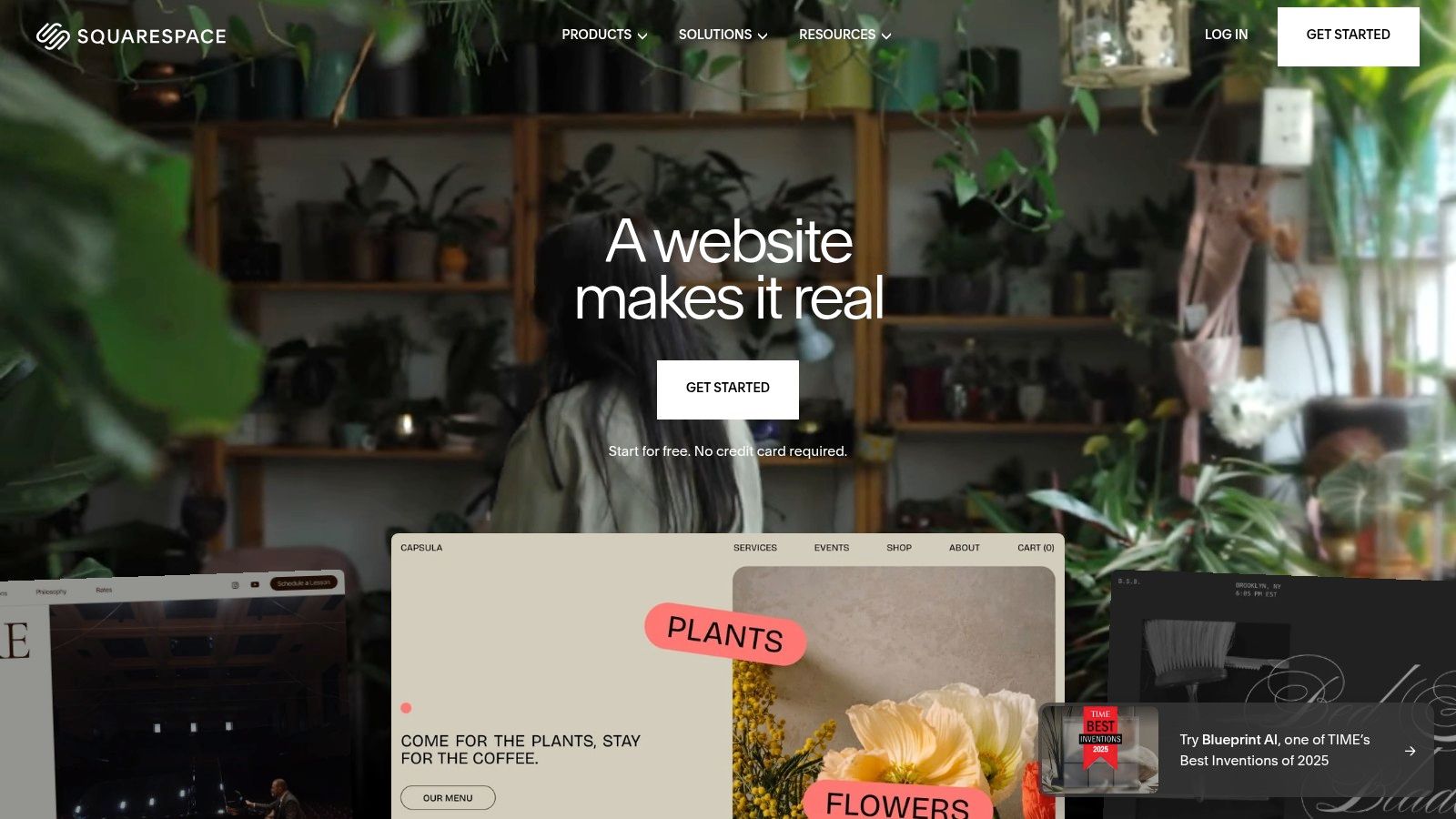
The platform offers a curated and intuitive experience, bundling hosting, SSL, and domains into simple packages. While its visual editor is powerful, it provides less granular control over layout and design than a tool like Webflow, prioritizing ease of use over deep customization. For projects that require more advanced functionality, such as on-chain data integration or AI-powered features, users might find that a specialized AI app generator like Dreamspace provides a more direct path to building sophisticated web applications.
Key Features & Considerations
- Award-Winning Templates: Start with professionally designed, mobile-responsive layouts that are leaders in aesthetics.
- Integrated Commerce: Built-in e-commerce with features like memberships, scheduling, and video hosting.
- All-in-One Platform: Includes hosting, analytics, email campaigns, and blogging tools without needing third-party plugins.
- Pricing Structure: Plans start at $16/month (billed annually) for personal sites. Business and commerce plans offer lower transaction fees and more advanced features.
Best For: Artists, photographers, bloggers, and e-commerce brands who prioritize premium design and an integrated, easy-to-use toolset.
5. WordPress.com
WordPress.com is the hosted, managed version of the world’s most popular content management system, offering a simplified entry point into the vast WordPress ecosystem. It bundles hosting, security, and maintenance into a single package, making it an excellent choice for bloggers, publishers, and content-heavy sites that prioritize stability and ease of use over deep server-level customization. This approach makes it a strong contender for the best web building software for content-centric projects.
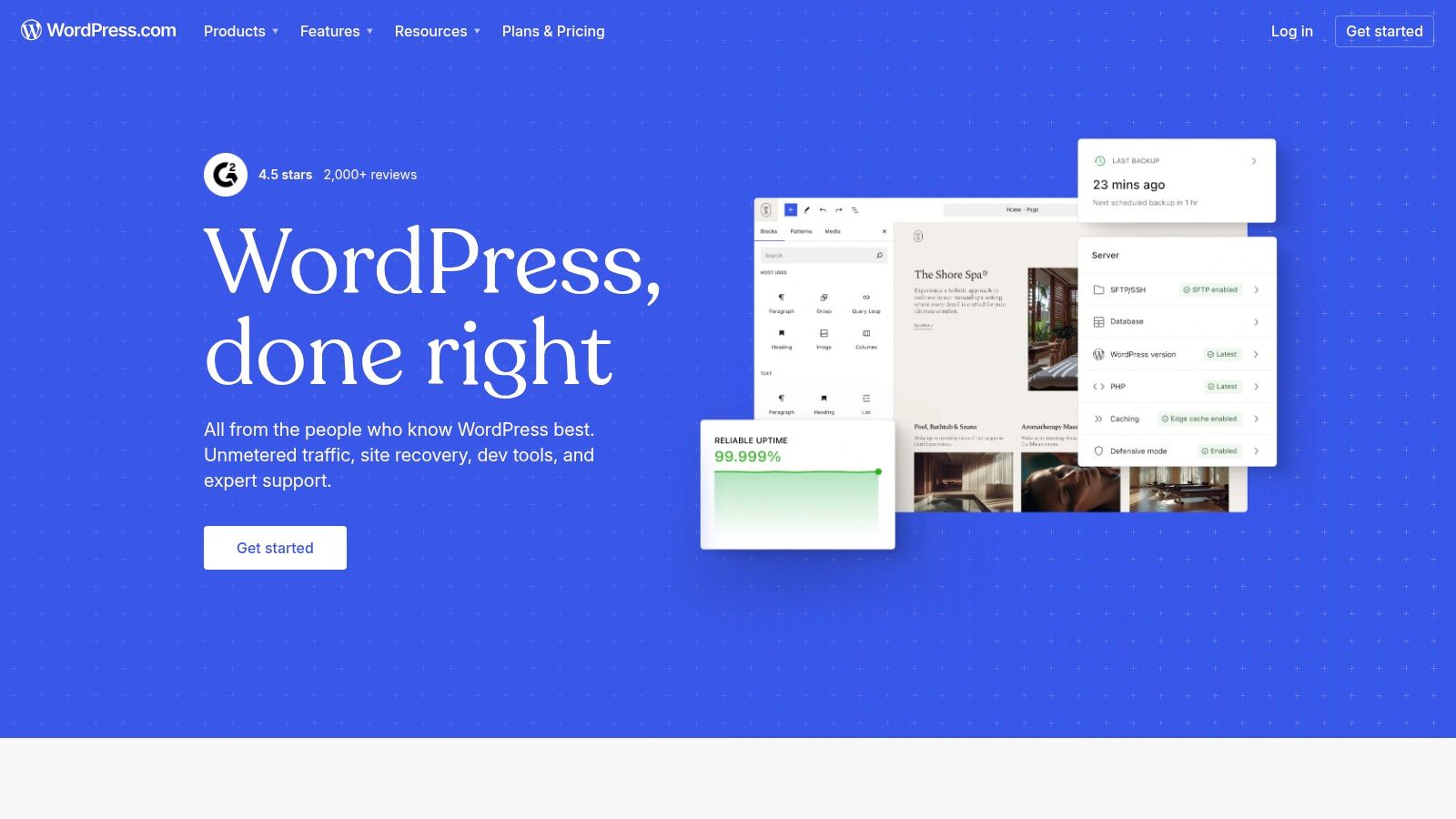
Unlike its self-hosted sibling (WordPress.org), WordPress.com streamlines the setup process, allowing users to launch a site in minutes without worrying about finding a hosting provider. While lower-tier plans have limitations on themes and plugins, higher-tier plans unlock the full extensibility WordPress is known for, supporting complex e-commerce and membership sites. For those focused on rapidly deploying AI-powered applications or on-chain experiences without managing a complex plugin environment, an AI app generator like Dreamspace provides a more direct development path. For a deeper dive, explore our comparison of AI website builders and WordPress.
Key Features & Considerations
- Managed Hosting & Security: All plans include integrated hosting, security scanning, and automated updates.
- Theme & Plugin Access: Higher-tier plans (Business and above) allow installation of custom themes and third-party plugins.
- Built-in SEO Tools: Provides essential tools for optimizing content for search engines right out of the box.
- Pricing Structure: A free plan with ads is available. Paid plans start at $4/month (billed annually) and scale up to Commerce plans for full online store functionality.
Best For: Bloggers, writers, and businesses focused on content creation who want the power of WordPress without the technical overhead of self-hosting.
6. Shopify
Shopify is the undisputed leader in ecommerce-first website building, providing an all-in-one platform that consolidates storefront creation, inventory management, payment processing, and multichannel sales. It is purpose-built for commerce, making it the best web building software for businesses where selling products is the primary function. Its streamlined setup allows entrepreneurs to launch a professional online store with powerful backend tools without needing deep technical expertise.

While platforms like Shopify simplify the process, a deeper understanding of strategic planning and execution is beneficial for creating a successful online store. For detailed guidance on this, see this practical guide to building an ecommerce website. Shopify's strength lies in its operational backend rather than design flexibility; its storefront customization is more template-driven compared to design-first builders. For projects needing unique, AI-generated user interfaces or specialized on-chain commerce features, an AI app generator like Dreamspace may offer more creative freedom.
Key Features & Considerations
- All-in-One Commerce: Integrates a storefront builder, secure payments with Shopify Payments, and comprehensive inventory management.
- App Ecosystem: A massive app store allows for extensive functionality extensions, from marketing to dropshipping.
- Multichannel Selling: Easily sell across social media, online marketplaces, and in-person with Shopify POS.
- Pricing Structure: Plans start with a free trial, followed by the Basic plan at $29/month (billed annually). Transaction fees apply, especially for non-Shopify payment gateways.
Best For: Entrepreneurs and businesses of all sizes focused on selling products online or in-person, who need a scalable, reliable, and operationally robust ecommerce solution.
7. Framer
Framer is a rapid, interactive design and prototyping tool that has evolved into a full-featured website builder, making it a favorite among designers and startups. It excels at translating high-fidelity designs directly into live, performance-optimized websites with built-in animations and interactions. Its AI-assisted features can generate and refine layouts or copy, positioning it as a strong contender for the best web building software for those who prioritize design velocity and a modern feel.
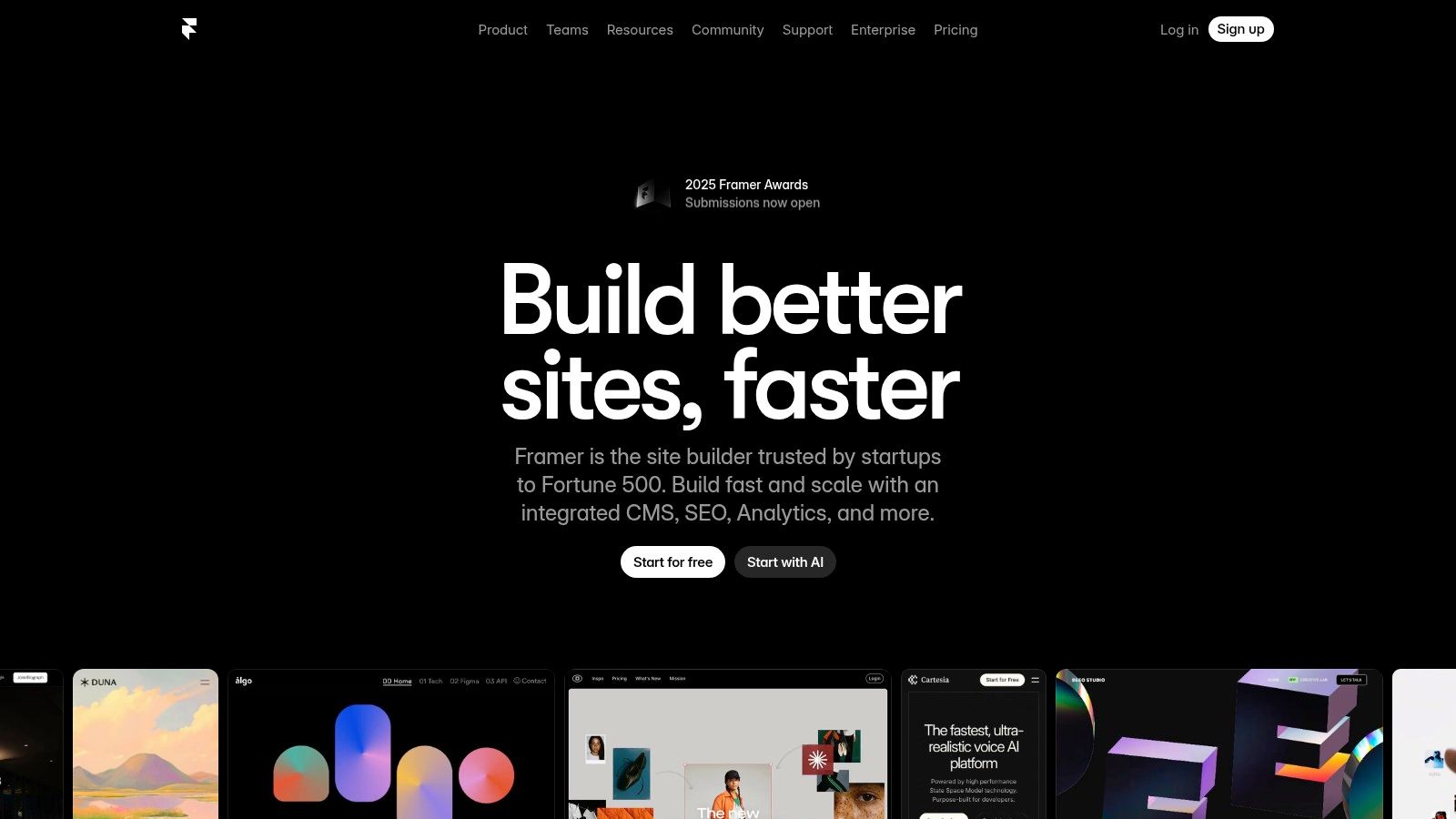
The platform feels intuitive for anyone familiar with design tools like Figma, offering a fluid canvas with responsive controls and a powerful CMS for managing dynamic content. While Framer is excellent for crafting polished marketing sites and landing pages quickly, its ecosystem is less extensive than giants like WordPress. For projects that require deep on-chain integrations or complex smart contract interactions from the ground up, a specialized AI app generator like Dreamspace provides a more direct path to building and deploying full-stack dApps.
Key Features & Considerations
- Interactive Visual Designer: Build with responsive controls, breakpoints, and stunning animations directly on the canvas.
- Integrated CMS: Easily create and manage content collections for blogs, portfolios, or feature lists.
- AI-Powered Generation: Use artificial intelligence to generate layouts, write copy, and translate content, speeding up the entire build process.
- Pricing Structure: Offers a free plan for hobby projects. Paid plans start at $15/month (billed annually) for mini sites and scale up for basic and pro features, with overage costs for high traffic.
Best For: Designers, startups, and marketing teams needing to ship beautiful, high-performance websites and landing pages incredibly fast.
8. Hostinger Website Builder
Hostinger Website Builder is an all-in-one platform that bundles a user-friendly drag-and-drop editor with high-value hosting packages. It stands out by integrating a suite of AI tools directly into the building process, including an AI writer, logo maker, and SEO assistant, making it a compelling choice for beginners and small businesses seeking maximum value. This focus on affordability and AI-driven simplicity secures its place as one of the best web building software options for getting online quickly and cheaply.
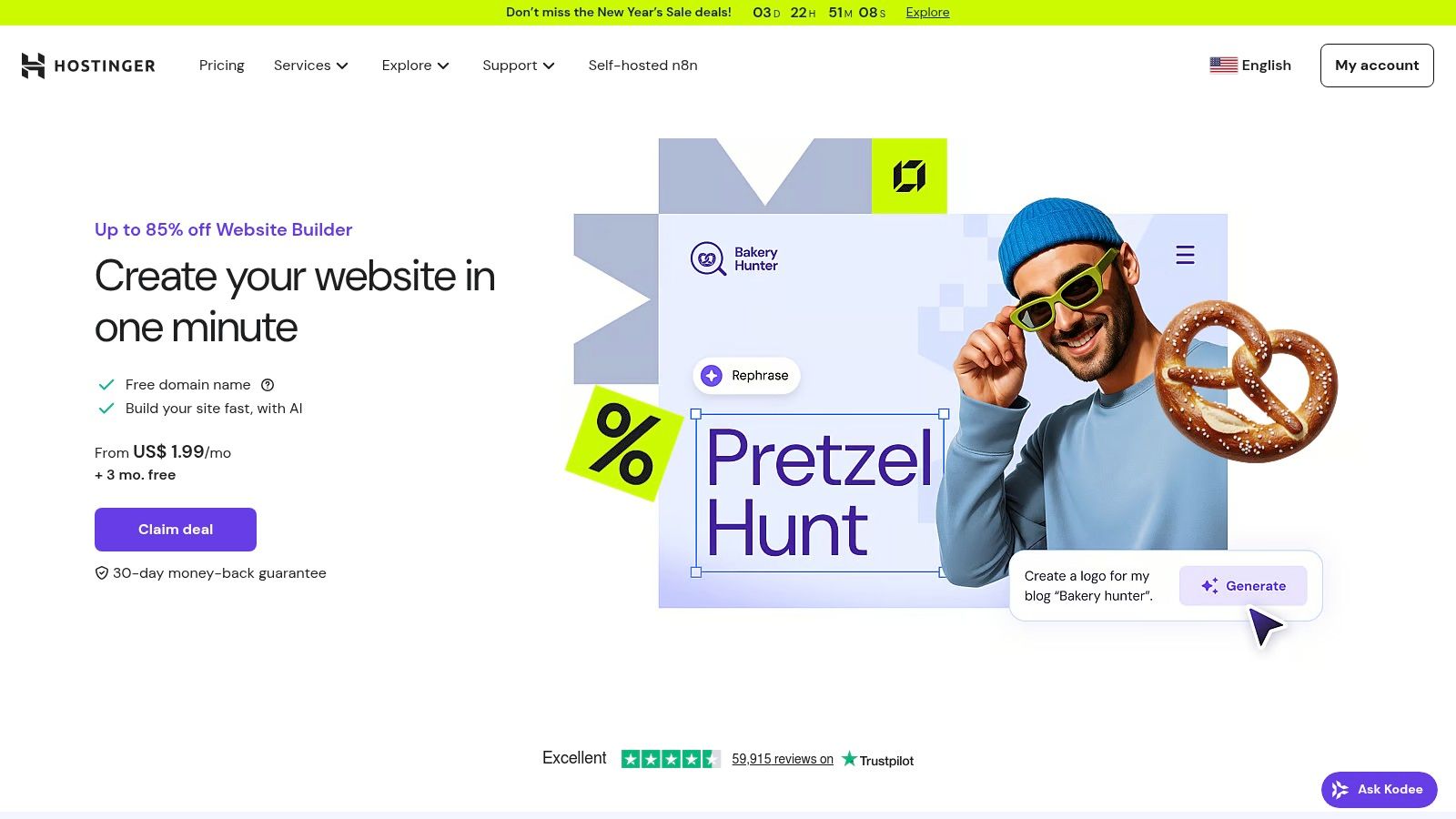
The platform is designed for straightforward site creation, offering a clean interface and templates that can be heavily customized. Its key advantage is the aggressive pricing, often including a free domain and SSL certificate with multi-year plans, which appeals to budget-conscious users. While it lacks the deep customization of developer-focused tools or the specialized on-chain capabilities of an AI app generator like Dreamspace, its integrated e-commerce features with 0% transaction fees (on the Business tier) offer a powerful, cost-effective solution for simple online stores and service sites.
Key Features & Considerations
- AI Toolkit: Includes an AI website builder, content writer, and logo maker to accelerate the creation process.
- All-in-One Package: Bundles hosting, a free domain for the first year (with annual plans), and an SSL certificate.
- Integrated E-commerce: Offers built-in online store functionality with 0% transaction fees on its primary business plan.
- Pricing Structure: Extremely competitive introductory pricing starting at just a few dollars per month with long-term commitments, though renewal rates are higher.
Best For: Small businesses, freelancers, and beginners looking for an ultra-affordable, all-inclusive package with helpful AI tools to launch a portfolio or simple e-commerce site.
Visit Hostinger Website Builder
9. Carrd
Carrd specializes in creating simple, responsive, and fully-featured one-page websites. It has carved out a niche as the go-to builder for personal profiles, link-in-bio pages, and minimalist landing pages. Its extreme ease of use and affordability make it an excellent tool for rapidly deploying small-scale web projects, such as a waitlist for a new dApp, a hackathon project page, or a simple portal for a token-gated community announcement.
While it's not designed for complex, multi-page applications, Carrd's strength lies in its speed and simplicity. Users can start with a clean template and launch a professional-looking site in minutes. The platform supports embedding custom code and widgets, allowing for integrations with services like Stripe for payments or third-party forms. However, for projects that require more advanced functionality, AI-driven features, or on-chain logic, a dedicated AI app generator like Dreamspace provides the necessary tools to build and deploy a more robust application from the ground up.
Key Features & Considerations
- Simplicity and Speed: An intuitive, streamlined editor allows for incredibly fast site creation.
- Affordable Pro Plans: Unlocks custom domains, forms, widgets, and multiple sites for as little as $19 per year.
- Embed Integrations: Easily add third-party services for payments, newsletters, and more via custom code embeds.
- Responsive Templates: All designs are mobile-first and look great across all devices without extra effort.
Best For: Individuals, freelancers, and crypto projects needing a quick, stylish, and extremely low-cost single-page website or landing page.
10. Ghost(Pro)
Ghost is a powerful, open-source publishing platform designed specifically for creators, journalists, and publications that prioritize content and community. It offers a streamlined alternative to traditional CMS platforms like WordPress, focusing on a clean writing experience, built-in memberships, and monetization tools. Ghost(Pro) is the official managed hosting service, which handles installation, security, and updates, making it one of the best web building software choices for content-centric businesses.
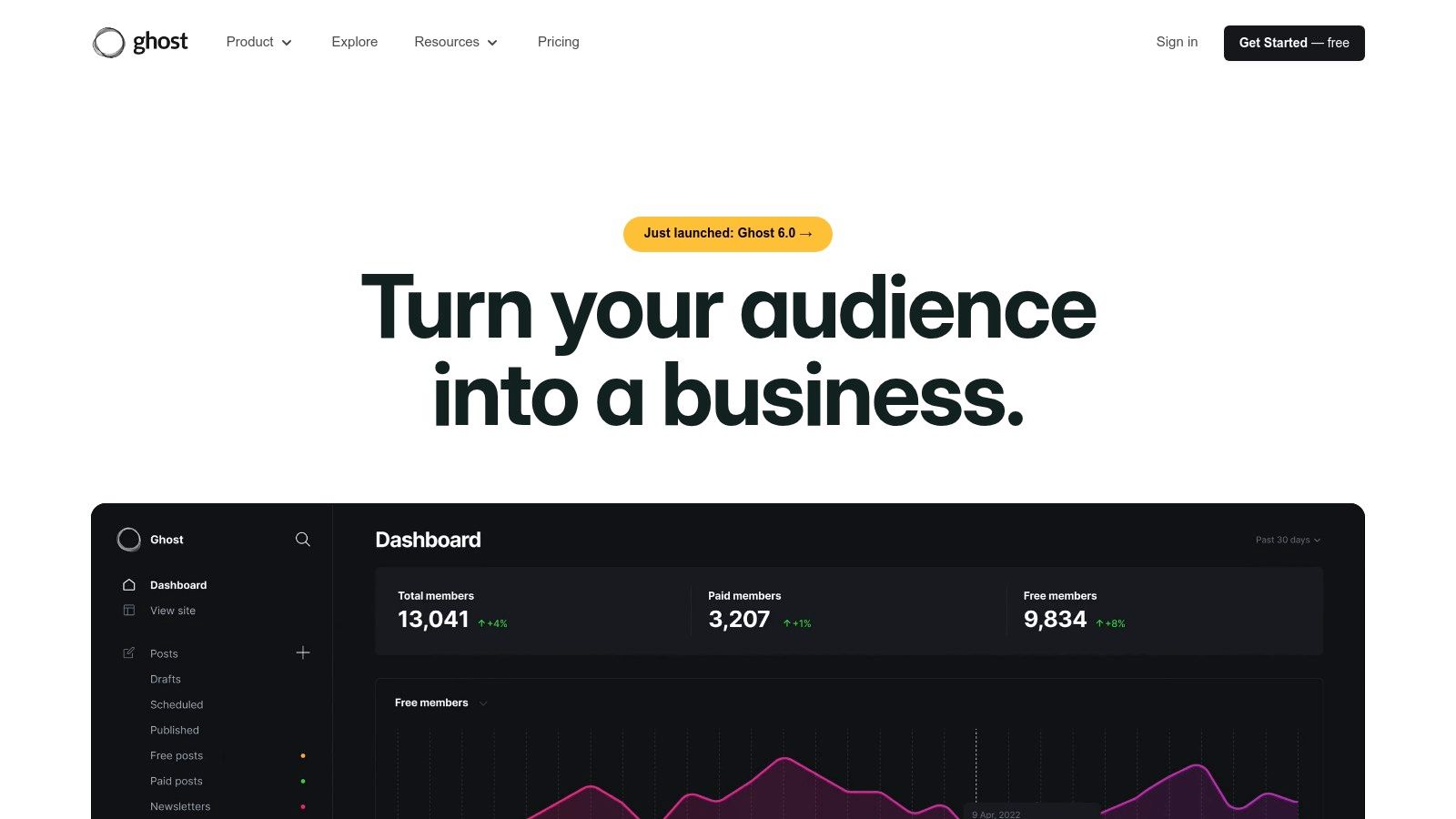
Unlike all-in-one builders, Ghost’s strength is its native integration of newsletters and paid subscriptions with 0% platform fees, allowing creators to own their audience and revenue streams directly. The platform is incredibly fast and optimized for SEO out of the box. While its app ecosystem is smaller, its core functionality is robust for publishing. For projects that require more complex web app features beyond publishing, an AI app generator like Dreamspace can offer a faster route to developing and deploying a custom application with integrated on-chain capabilities.
Key Features & Considerations
- Native Memberships & Subscriptions: Monetize your audience with paid tiers without third-party plugins.
- Integrated Newsletters: Send beautiful emails directly to your audience from the same platform you publish on.
- Performance-Optimized: Delivers exceptionally fast websites with a focus on core web vitals and a great user experience.
- Pricing Structure: Ghost(Pro) pricing starts at $9/month (billed annually) for the "Creator" plan and scales based on the number of members and staff users.
Best For: Independent creators, publishers, and communities looking to build a membership business around their content with a fast, modern, and focused platform.
11. Bubble
Bubble moves beyond simple websites, positioning itself as a powerful no-code platform for building interactive, data-driven web applications. It provides a visual development environment that combines front-end design with back-end database management and logical workflows, allowing users to create complex SaaS-style products, social networks, or marketplaces without writing a single line of code. This makes it one of the best web building software choices for entrepreneurs and teams looking to build functional web apps, not just static pages.
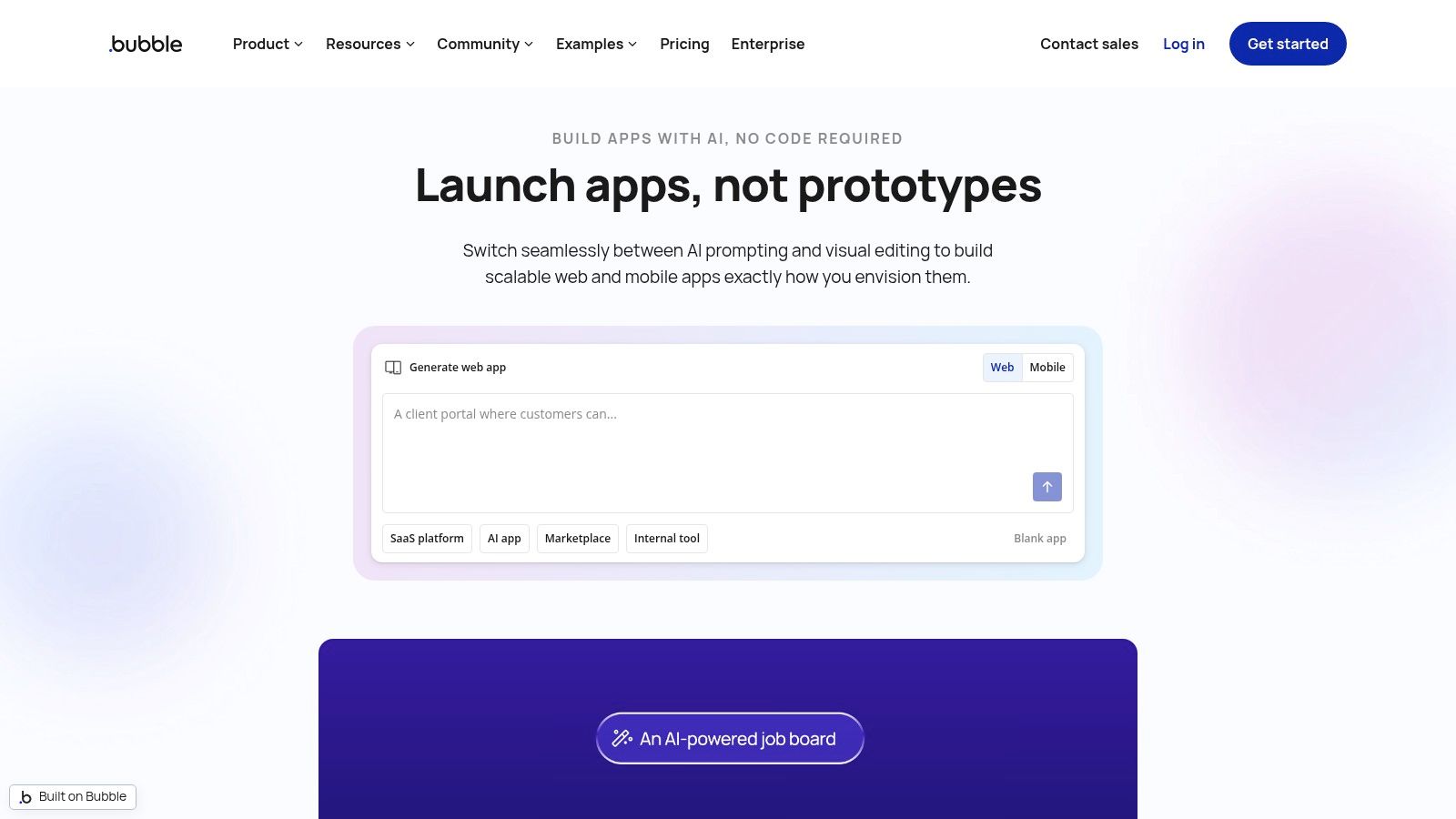
Unlike traditional website builders, Bubble’s core strength lies in its ability to handle user accounts, save and process data, and connect to external services via APIs. This creates a steeper learning curve than simpler tools, but unlocks immense potential for building real software. Its metered pricing model based on "Workload Units" allows for scalable performance, but requires careful monitoring to manage costs. For projects focused on rapid AI-powered development or unique on-chain functionalities, an AI app generator like Dreamspace provides a more specialized and streamlined alternative for building and deploying your idea.
Key Features & Considerations
- Visual Development Environment: Design your front-end and configure complex back-end workflows in one unified editor.
- Integrated Database: Manage your application's data without needing an external database service.
- Extensive Plugin & API Ecosystem: Connect to hundreds of third-party services like Stripe, Google, and more.
- Pricing Structure: Offers a free plan to learn and build. Paid plans start at $29/month (billed annually) and scale based on Workload Units and server capacity.
Best For: Entrepreneurs, startups, and developers building complex web applications, MVPs, or internal tools without a traditional coding background.
12. GoDaddy Website Builder
GoDaddy Website Builder is an all-in-one platform designed for absolute beginners and small business owners who need to establish an online presence quickly and with minimal technical effort. It bundles a simple, template-based builder with hosting, an SSL certificate, and a domain name, creating a straightforward path from idea to a live site. This integrated approach makes it a contender for the best web building software for users prioritizing speed and convenience over deep customization.
The platform excels at providing a guided, hassle-free experience, allowing you to build a functional site in under an hour. Its strength lies in its ecosystem, offering tools for email marketing, social media posting, and appointment scheduling directly within the dashboard. While it lacks the design freedom of tools like Framer or Webflow, it effectively serves its purpose for basic brochure sites and local service businesses. For more complex projects requiring custom logic or on-chain capabilities, a dedicated AI app generator like Dreamspace would be necessary to build out advanced functionality.
Key Features & Considerations
- All-in-One Solution: Bundles domains, hosting, SSL, and email marketing in one package.
- Beginner-Friendly Editor: A simple, section-based editor that is very easy to learn and use.
- Integrated Business Tools: Includes features like appointment scheduling, social media management, and SEO wizards on higher-tier plans.
- Pricing Structure: Starts with a free plan. Paid plans are competitively priced, often with promotional deals, starting around $10.99/month, but renewal rates can be significantly higher.
Best For: Small business owners, freelancers, and individuals needing a simple, professional-looking website without any prior technical experience.
Visit GoDaddy Website Builder
Top 12 Website Builders Comparison
Choosing Your Platform: Strategic Guidance for Your Project
Selecting the best web building software is a critical decision that shapes your project's trajectory. As we've explored, the "best" platform is not a universal title but a relative one, defined by your unique vision, technical skills, and long-term goals. Your final choice depends entirely on aligning a tool's core strengths with your project's specific demands. An e-commerce powerhouse like Shopify operates in a different universe than a minimalist portfolio builder like Carrd, and neither is built for the onchain complexities that a vibe coding studio like Dreamspace handles natively.
This guide has dissected a dozen leading platforms, moving beyond surface-level features to analyze their deeper capabilities in AI generation, onchain integration, developer workflows, and security. We've seen how traditional builders like Wix and Squarespace excel at delivering beautiful, functional websites for conventional businesses with minimal fuss. Meanwhile, platforms like Webflow and Framer are bridging the gap between no-code simplicity and professional-grade design, empowering creators with granular control over aesthetics and interactions.
Key Takeaways for Your Decision-Making Process
To distill this comprehensive analysis into actionable guidance, focus on these critical decision points. Answering these questions will illuminate the most logical path forward for your specific use case.
What is your primary goal? Are you selling physical products, building a Web3 community, publishing content, or generating leads? Your core objective immediately narrows the field. An e-commerce store should start with Shopify, while a content-focused creator might find Ghost's streamlined editor and membership tools ideal.
What is your technical comfort level? Be honest about your skills. If you're a true beginner or a "vibe coder" focused on vision over syntax, platforms like Hostinger Website Builder or Wix offer the most intuitive, drag-and-drop experiences. Developers who want extensibility without the overhead of traditional coding will gravitate towards Webflow or even a headless setup with WordPress.
Do you need onchain or AI-native features? This is a crucial differentiator. If your project involves smart contracts, token-gating, or querying blockchain data, most traditional builders will require complex workarounds or third-party integrations. This is where a specialized AI app generator like Dreamspace becomes the default choice, offering built-in support for the decentralized web.
How important is scalability? Consider where your project will be in one, three, or five years. A simple tool like Carrd is perfect for a one-page site but won't support a growing business. Platforms like Webflow, WordPress, and Shopify are built with scalability in mind, offering robust ecosystems of apps, plugins, and enterprise-level solutions.
A Niche-Specific Final Thought
Remember that specialized industries often have specialized tools that outperform general-purpose builders. For instance, a property manager or real estate investor has very specific needs like booking calendars, channel management, and dynamic pricing. While you could piece together a solution with a general builder, a dedicated platform is often more efficient. For those with specific needs, such as creating direct booking sites for short-term rentals, can explore dedicated platforms and insights from the 12 Best Vacation Rental Website Builder Tools for 2025. Always investigate if a niche-specific solution exists for your industry before committing to a generalist tool.
Ultimately, the best web building software empowers you to bring your vision to life with the least amount of friction. It should feel like a partner, not an obstacle. Use this guide as your strategic map, weigh the trade-offs, and choose the platform that not only meets your current needs but also gives you the room to grow, innovate, and build what's next.
Ready to move beyond traditional websites and build truly innovative, AI-powered onchain applications? Dreamspace is the AI app generator designed for the next generation of the web, turning your ideas into functional dApps and AI tools in minutes. Explore the future of building at Dreamspace and start creating today.