
What Is a Smart Contract? A Simple Explainer
At its most basic, a smart contract is a self-executing program that lives on a blockchain. It’s designed to automatically spring into action when certain conditions are met.
The classic analogy is a vending machine. You put in your money (the condition), and the machine automatically gives you a soda (the outcome). There's no cashier, no negotiation—just a simple, automated "if-this-then-that" process. Smart contracts bring that same direct, no-fuss logic to the digital world.
Deconstructing the Digital Handshake
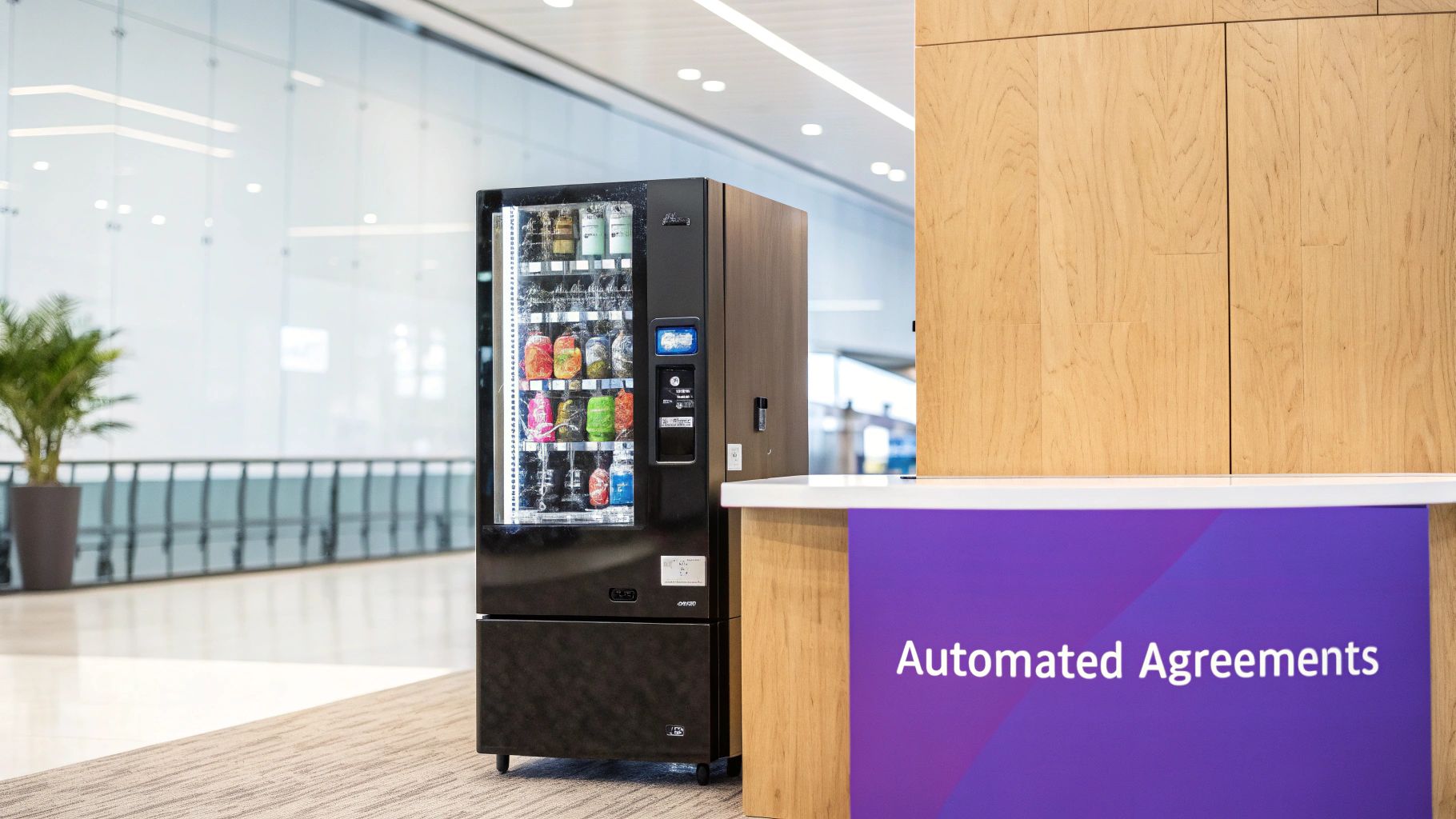
So, what does this actually look like in practice? A smart contract is an agreement where the terms aren't just written on paper; they're written directly into code. This code is then placed onto a decentralized blockchain network.
Once it's there, it's immutable (it can't be changed) and completely transparent. The contract just sits there and does its job, enforcing rules and executing transactions exactly as it was programmed to, with no human intervention needed. This cuts out the middlemen—the banks, lawyers, and brokers—and replaces them with the certainty of code.
The Foundation of Trustless Transactions
The real magic here is that smart contracts create a "trustless" environment. That might sound a little strange, but it doesn't mean you can't trust anyone. It means you don't have to. The system is built so that trust isn't a prerequisite for a successful deal.
Because these contracts run on a blockchain, they execute automatically and their transactions are recorded permanently. It all just works. If you want to dive deeper into the nuts and bolts, our guide on what blockchain development is is a great place to start.
A smart contract isn't just a digital agreement; it's a guaranteed outcome. The code is the law, and once it's on the blockchain, it follows its instructions to the letter, ensuring all parties adhere to the agreed-upon terms without exception.
Traditional vs. Smart Contracts at a Glance
To really understand the shift, it helps to see a direct comparison. Here’s how old-school agreements stack up against their modern counterparts.
As you can see, smart contracts fundamentally change how agreements are managed, trading manual processes for automated efficiency.
Automating Agreements for Everyone
This isn't just for Wall Street traders or huge corporations. The applications are incredibly practical for everyday situations. Imagine a contract that automatically releases payment to a freelancer the moment their work is submitted, or one that transfers ownership of a digital concert ticket as soon as the payment clears.
The whole point is to make agreements more:
- Efficient: No more waiting around for someone to process paperwork. The contract handles it instantly.
- Secure: Strong cryptography makes it nearly impossible for anyone to tamper with the terms.
- Transparent: Everyone involved can see the contract's rules and transaction history on the blockchain.
And it's getting easier to build these. Platforms like Dreamspace, our AI-powered vibe coding studio, are opening the doors for creators. You can describe your idea in plain English, and the AI helps turn it into a functional smart contract, letting anyone tap into the power of automation.
The Journey from Concept to Code
Believe it or not, the idea for smart contracts is actually older than the blockchain itself. The concept didn’t spring from a Silicon Valley startup, but from the mind of computer scientist and cryptographer Nick Szabo way back in 1994. He envisioned digital agreements that could enforce themselves, cutting out middlemen like banks or lawyers.
For years, it was just a brilliant idea trapped on paper. The technology needed to make it work securely and without a central authority just wasn't there yet. It was a blueprint waiting for the right foundation to be built.
The Ethereum Revolution
That foundation finally arrived in 2015 with the launch of Ethereum. Ethereum wasn't just another coin; it was a game-changer. It introduced a flexible, Turing-complete programming language called Solidity, finally giving developers the tools they needed to build sophisticated, custom smart contracts.
The concept of smart contracts was first proposed by Nick Szabo in 1994, who envisioned a computerized protocol to automatically execute the terms of contracts. Ethereum, launched in 2015, revolutionized the space by providing a Turing-complete programming language (Solidity) that enabled developers to create complex, customizable smart contracts. You can find more details about how Solidity powers smart contracts on GeeksForGeeks.org.
This was the spark. Szabo’s decades-old concept suddenly became a reality. Developers could now write complex "if-this-then-that" rules directly onto a decentralized network, creating applications that were unstoppable and totally transparent.
This single capability kicked off a massive wave of innovation, laying the groundwork for everything we now call Web3. Without these automated agreements, the crypto world would look completely different today.
Building Blocks of Web3
Ethereum's big idea—making the blockchain itself programmable—unlocked a flood of new possibilities that simply weren't possible before.
The impact was huge. Entire ecosystems popped up, all built on trust that was baked directly into the code:
- Decentralized Finance (DeFi): This whole industry, now handling billions, is powered by smart contracts. They automate lending, borrowing, and trading, all without a single bank in sight.
- Non-Fungible Tokens (NFTs): Every time an NFT is bought or sold, a smart contract is running the show, managing ownership and proving authenticity.
- Decentralized Autonomous Organizations (DAOs): Imagine a company run by code. That's a DAO. Smart contracts define all the rules, from voting on proposals to managing the treasury.
The path from a simple idea to world-changing code shows just how fundamental smart contracts are. If you want to dive deeper into the code itself, check out our guide to smart contract programming languages.
Today, things are getting even easier. Tools like the Dreamspace AI app generator let you build powerful smart contracts just by describing what you want—no coding required. The journey from theory to a tool anyone can use is still pushing the boundaries of what's possible online.
How Smart Contracts Get the Job Done
At its heart, a smart contract is just a piece of code. A developer writes the "rules of the game"—the specific "if-then" conditions that govern an agreement. Think of it like a simple instruction: "IF you deposit 1 ETH, THEN I will transfer ownership of this digital artwork to you."
Once that code is written, it gets deployed to a blockchain network like Ethereum. This is the point of no return. The contract is now a living, breathing entity on the network, completely independent of its creator. It’s set in stone and sits there, waiting for someone to meet its conditions.
The Magic of Automatic Execution
The real beauty of a smart contract is that it runs itself. No middlemen, no manual approvals—the blockchain network takes care of everything. This self-enforcing system stands on three powerful pillars that make the whole thing work without needing to trust anyone.
These features work together to create an environment where the outcome is guaranteed by math and code, not by a handshake or a promise.
- Immutability: Once a smart contract is live on the blockchain, its code can't be touched. Ever. This means no one can sneak in and change the terms of the deal after the fact. What you agree to is what gets executed.
- Transparency: The contract's code is out in the open for everyone to see. All parties can read the rules before they commit, so there are no hidden fees or nasty surprises buried in the fine print.
- Decentralization: The contract isn't sitting on one company's server; it's copied across thousands of computers worldwide. This makes it incredibly resilient—you can't shut it down, tamper with it, or censor it.
This infographic breaks down the journey from a groundbreaking idea to the powerful tool we have today.
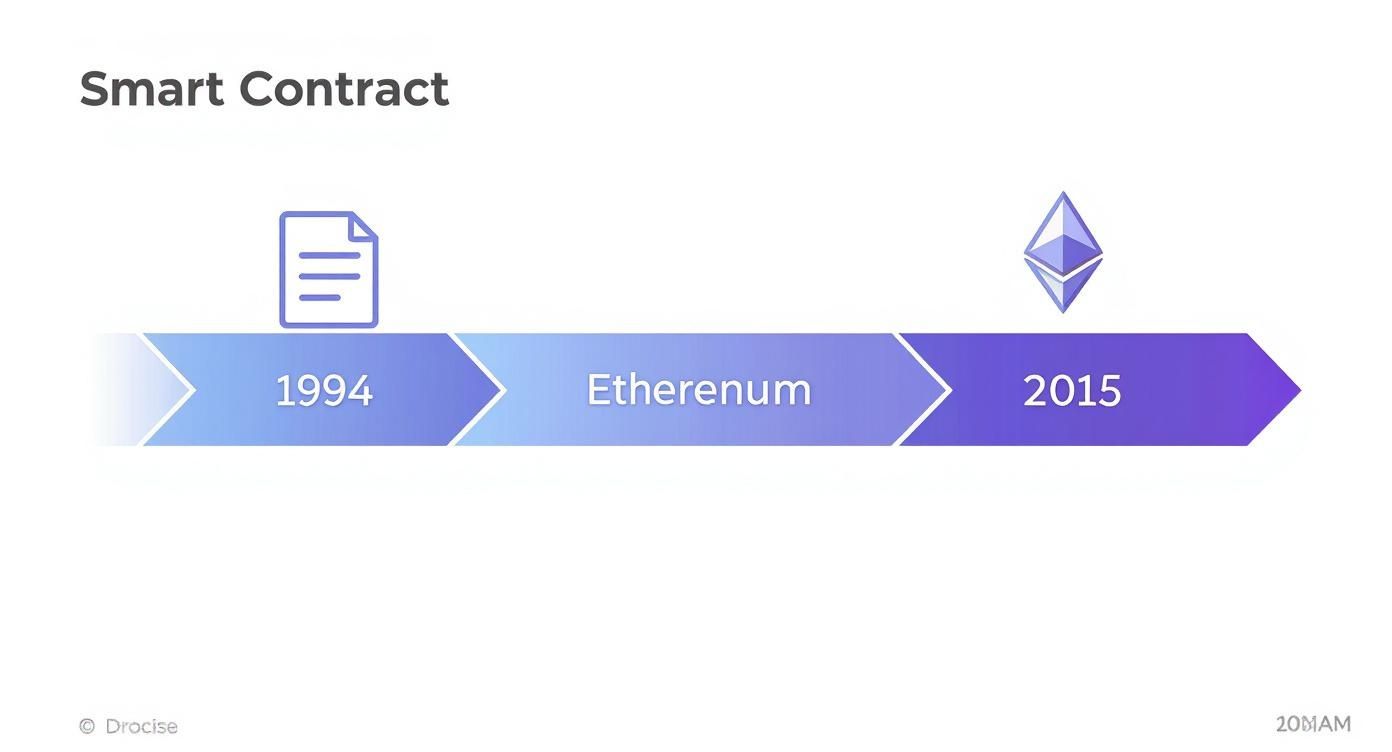
It really highlights the massive leap from Nick Szabo’s initial concept back in 1994 to Ethereum making it a practical reality in 2015, which truly opened the floodgates for what’s possible.
From Trigger to Final Outcome
So, what happens when someone finally meets the contract's conditions, like sending that 1 ETH payment? The code springs to life automatically. The network of computers validates that the conditions have been met and immediately carries out the programmed action. This could be anything from releasing funds and transferring ownership to issuing a digital ticket.
A smart contract is like a vending machine for digital agreements. You put in the right coin (meet the condition), and the machine automatically dispenses your item (the outcome). No human intervention needed.
This automatic enforcement is the secret sauce. The agreement is settled instantly, securely, and without any room for argument. And today, you don't even need to be a coding wizard to build one. Tools like the Dreamspace AI app generator are making it possible for anyone to design and deploy their own smart contracts with a few simple prompts.
Why This Tech Is Such a Big Deal
Forget the technical jargon for a second. The real reason everyone's talking about smart contracts is what they actually do. They're not just a new way to write agreements; they're a complete overhaul of how we trust each other, get things done, and handle money.
Think about it: traditional contracts are slow, expensive, and rely on a whole chain of people to make sure they're followed. Smart contracts throw that model out the window. They're built for speed and efficiency, automating the boring stuff so things just... happen.
Cut Costs, Work Faster
One of the biggest wins right off the bat? No more middlemen. Lawyers, brokers, notaries—these roles have always been the gatekeepers of trust, and they charge a premium for it.
Smart contracts don't need a human go-between. The code is the law. It automatically checks if the conditions are met and executes the deal on the spot. This peer-to-peer approach means you can slash those expensive commission fees and service charges, saving a ton of cash.
The domino effect is huge:
- Warp Speed: We're talking minutes, not days or weeks. Once the conditions are satisfied, the contract fires instantly. No more waiting for someone to stamp a piece of paper.
- Pinpoint Accuracy: Humans make mistakes. Code doesn't. A smart contract runs exactly as programmed, every single time, eliminating costly errors.
A smart contract is like a perfect digital referee. It follows the rules of the game to the letter—no bias, no getting tired, and no chance of a bad call. Every deal settles exactly the way everyone agreed it would.
A Bedrock of Security and Trust
This is where things get really interesting. Security isn't an afterthought; it's baked right into the DNA of a smart contract. Living on a blockchain means they're wrapped in layers of powerful cryptography, making them incredibly tough to tamper with.
Once a contract is on the blockchain, its terms are set in stone. This immutability creates a level of trust and transparency we've never had before. Anyone involved can see the code and the entire history of transactions. No hidden clauses, no secret handshakes. It’s all out in the open, which gives everyone the confidence that the deal is fair and square.
This secure foundation is a playground for developers and creators. And with tools like Dreamspace, you don't need to be a coding genius to get started. It’s an AI app generator that helps you turn your ideas into secure, working smart contracts. This is what makes the technology so powerful—it makes building on trust accessible to everyone.
Smart Contracts in Action Across Industries
Theory is one thing, but to really get a feel for what smart contracts can do, you have to see them in the wild. These self-executing bits of code are already fixing real-world headaches, making things faster, cheaper, and way more transparent in some pretty surprising places.

From finance to shipping, smart contracts are slicing through red tape and kicking expensive middlemen to the curb. They’re the hidden engine powering some of the coolest things happening in the digital economy.
Decentralized Finance (DeFi)
DeFi is probably the most famous example. The entire Decentralized Finance ecosystem, which has been valued at over $50 billion, is built on a foundation of smart contracts. Think of them as tiny, automated banks that let you lend, borrow, and trade without ever stepping foot inside a traditional financial institution.
When you lend out crypto on a DeFi platform, a smart contract grabs your assets, holds them securely, and automatically pays you interest. It’s a completely impartial system, enforcing the rules of the loan without bias and opening up finance to everyone.
Supply Chain Management
The global supply chain is a messy tangle of producers, shippers, and stores. Smart contracts are bringing some much-needed order to that chaos. For instance, a contract can be set up to instantly pay a supplier the exact moment a shipment's GPS data shows it has arrived at the warehouse.
This one piece of automation fixes a ton of problems all at once:
- Instant Payments: Suppliers get their money right away instead of chasing invoices for weeks.
- Full Transparency: Everyone involved can see where the goods are and confirm all the conditions were met.
- Reduced Disputes: The code is the final word, creating an undeniable record of what happened and when.
Smart contracts transform supply chains from a series of handshakes and paperwork into a seamless, automated flow. An item’s journey from factory to shelf becomes a transparent, self-verifying process where payments are tied directly to proven actions.
Real Estate and Insurance
Other industries are catching on, too. Real estate, for example, is perfect for this kind of upgrade. Smart contracts have the potential to completely simplify complex traditional real estate agreements. Just imagine a property title zipping over to the buyer automatically the second the smart contract confirms the payment has been received. All the escrow paperwork, gone.
In insurance, it’s just as slick. A smart contract can plug into a flight-tracking service. If your flight gets delayed more than two hours, bam—the contract automatically triggers a payout straight to your account. No claim forms, no waiting on hold.
This direct "if this, then that" logic is what makes these agreements so powerful. And the best part? Building them is getting easier. Tools like Dreamspace, a vibe coding studio where you can generate smart contracts with AI, are making this kind of advanced tech accessible to more people than ever before.
Bringing Your Smart Contract Idea to Life
So, what if you have a killer idea for a dApp but don't know the first thing about blockchain coding? You're in luck. Building with smart contracts isn't just for veteran developers anymore. A whole new set of tools is opening up this technology for everyone.
Instead of getting bogged down for months trying to master complex languages like Solidity, you can now use platforms that do the heavy lifting for you. It's a fundamental shift, empowering a new generation of creators to build amazing things on-chain.
From Plain English to Deployable Code
This is where Dreamspace comes in. As an AI app generator and vibe coding studio, it’s designed to completely flatten the learning curve. You can literally just describe your smart contract's logic in plain English, and the AI translates it into secure, functional, and deployable code.
This process is making Web3 development accessible to anyone with a good idea. Entrepreneurs, artists, and innovators can finally tap into the power of smart contracts without getting stuck on the technical side. Ready to dive in? Our guide on how to build smart contracts is the perfect place to start.
By taking the coding barrier out of the equation, AI-powered tools are unlocking the creative potential of millions. The next big thing in Web3 might come from a musician or a community organizer—not just a software engineer.
As you get ready to build, having the right development and documentation tools makes all the difference. Checking out resources on the best Solidity documentation tools can really help you get organized. Ultimately, tools like these are making it possible for anyone to bring their blockchain ideas to life.
Answering Your Top Questions
As you start digging into smart contracts, a few questions always pop up. Getting your head around these is the key to understanding what they can—and can't—do. Let's tackle the big ones.
People often ask if a smart contract is actually a legally binding contract. The honest answer? It's a gray area. While the code executes flawlessly based on its rules, its standing as a formal legal agreement is still catching up and changes wildly depending on where you are. We're seeing progress in bridging the gap between code and law, but for now, they aren't a one-to-one replacement for traditional legal documents.
Can a Smart Contract Be Changed?
This is a huge one. Once a smart contract is out there on the blockchain, can you change it? The short answer is no. A core feature is immutability, which means the code is set in stone once it's deployed. You can't just go in and edit it.
But, developers are a clever bunch. They've figured out workarounds using things like "upgradeability patterns" and proxy contracts. This basically lets them direct users to a newer, better version of the contract. It's how teams fix bugs or add new features without breaking the original agreement's address on the blockchain.
What Are the Biggest Risks Involved?
It's not all smooth sailing, and you have to be aware of the risks. The most significant dangers usually come from the code itself. A single bug or a sneaky vulnerability can be exploited by hackers, and we've all seen the headlines about hacks that have cost millions.
A few other things to keep an eye on:
- Oracle Reliance: Many contracts need outside information (from "oracles") to work. If that external data feed gets corrupted or hacked, the contract can make the wrong move.
- High Network Fees: On popular blockchains like Ethereum, running a contract can get expensive when the network is congested. These "gas fees" can sometimes spike unexpectedly.
This is exactly why intense testing and professional security audits are non-negotiable before any smart contract goes live.
Ready to stop reading and start building? With Dreamspace, you can generate your own smart contracts just by describing them to an AI. It's the vibe coding studio that brings your on-chain ideas to life, no coding required. Get started at Dreamspace.