
Top 12 Platforms for Code Sharing Online in 2025

In the fast-paced world of software development, from intricate AI app generators to decentralized blockchain projects, the need for efficient and reliable code sharing online is more critical than ever. Whether you're a solo developer debugging a tricky function, a distributed team collaborating on a massive repository, or a vibe coder at a studio like Dreamspace looking to share a creative snippet, the tool you choose can significantly impact your workflow and productivity. Moving beyond a simple copy-paste into a chat window is essential for maintaining version control, getting contextual feedback, and ensuring security.
This comprehensive guide is designed to help you navigate the diverse ecosystem of code sharing platforms. We will dive deep into the best tools available, moving past surface-level descriptions to provide a practical analysis of each one. You'll find a detailed breakdown of 12 top-tier platforms, including everything from full-scale repository hosts like GitHub and GitLab to quick-sharing snippet tools like Gist and Pastebin, and even interactive online IDEs like Replit and CodeSandbox.
Our goal is to arm you with the information needed to select the perfect platform for your specific use case. Each entry in this listicle includes:
- Honest assessments of features and limitations.
- Practical use-case scenarios for developers, AI engineers, and crypto fans.
- Direct links and screenshots for a clear visual reference.
Many of these platforms also integrate powerful community-building features, which are vital for open-source projects and team collaboration. For those interested in the broader strategies behind fostering such an environment, this guide to building a creator's community platform offers valuable insights. Let's explore the tools that will elevate your code sharing process from a simple task to a strategic advantage.
1. Dreamspace
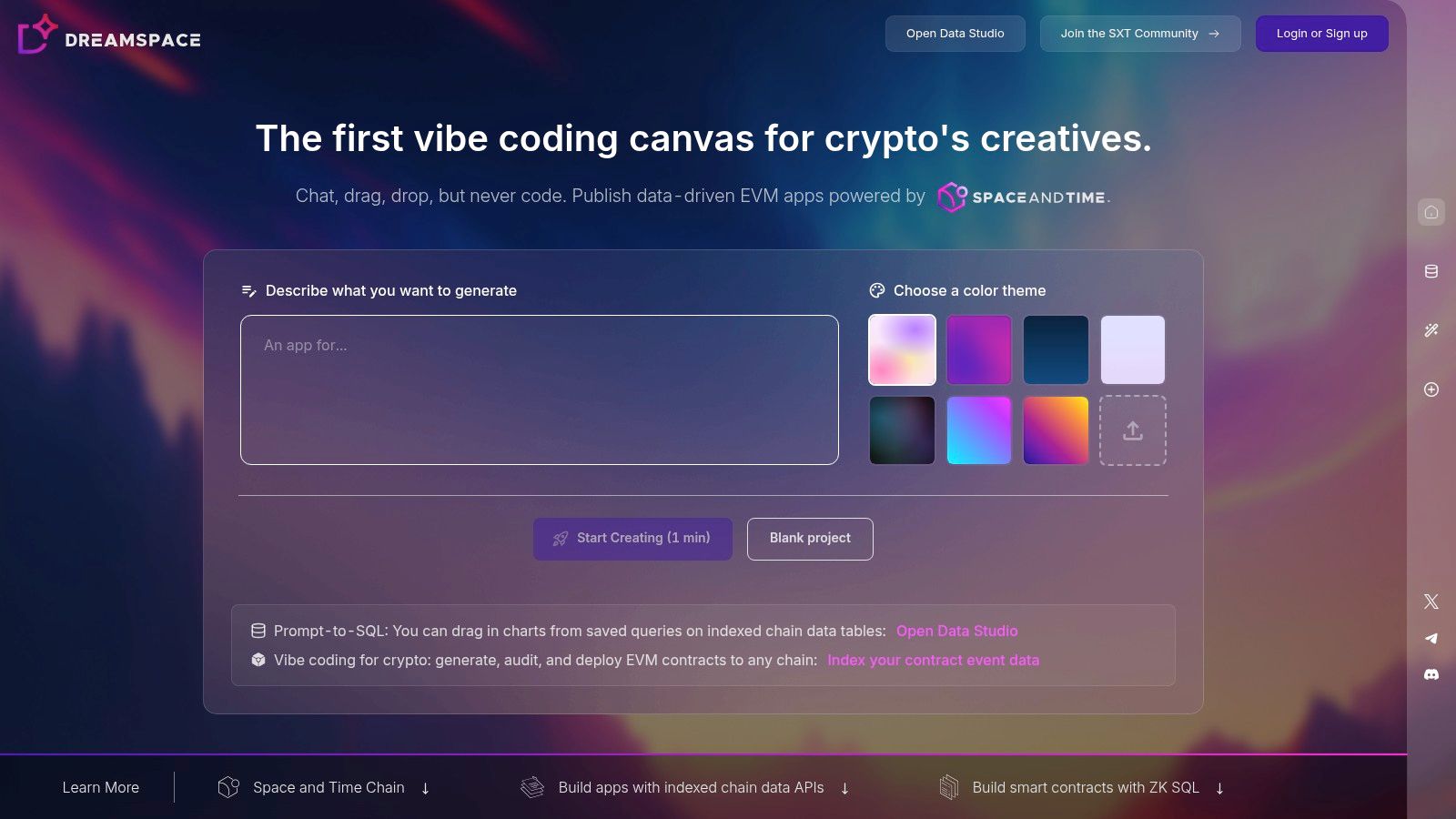
Dreamspace offers a revolutionary approach to development, particularly for the crypto and blockchain space, by pioneering a "vibe coding" environment. It functions less as a traditional platform for code sharing online and more as a collaborative, no-code AI app generator. This unique positioning allows both seasoned developers and those without programming expertise to build and deploy production-ready onchain applications.
The platform’s core is an intuitive drag-and-drop canvas where users describe their application’s goals. Dreamspace then translates these ideas into functional components. This process is ideal for rapid prototyping and bringing complex blockchain concepts to life visually, making it a standout choice for those looking to innovate without getting bogged down in syntax.
Core Features & Use Cases
Dreamspace excels with its specialized features tailored for the Web3 ecosystem. The prompt-to-SQL functionality is a powerful tool, enabling users to generate dynamic charts and data visualizations from indexed blockchain data simply by writing a text prompt. This capability is powered by its integration with the Space and Time Chain, providing direct access to robust, indexed onchain data APIs.
Key capabilities include:
- No-Code Smart Contract Generation: Users can design, audit, and deploy EVM-compatible smart contracts across multiple chains without writing any Solidity or other smart contract language.
- Data-Driven App Development: Build sophisticated applications that query and display real-time blockchain data, perfect for creating dashboards, analytics tools, or dApps.
- AI-Powered Vibe Coding Studio: As a premier vibe coding studio, it empowers AI app generators and creative developers to focus on the "what" and "why" of their project, leaving the "how" to the platform's intelligent engine.
Practical Considerations
While Dreamspace opens doors for many, it’s important to note its specific focus. Its strength lies in the no-code, Web3-centric development paradigm. Users seeking advanced, low-level customization might find the abstraction layer limiting. Furthermore, pricing details are not publicly available on the website, requiring interested users to sign up and engage with the platform to understand potential costs.
- Empowers non-programmers to build onchain apps and smart contracts.
- Intuitive "vibe coding" canvas with prompt-based data visualization.
- Seamless deployment to any EVM-compatible blockchain.
- Strong integration with indexed blockchain data for powerful analytics.
- Pricing information is not publicly disclosed.
- Advanced customization may be limited by the no-code interface.
Website: https://dreamspace.xyz
2. GitHub
GitHub is the undisputed heavyweight champion in the world of online code sharing and version control. It's more than just a place to store Git repositories; it's a comprehensive platform for software development, collaboration, and community engagement. Built on the Git version control system, GitHub provides a robust suite of tools that cater to individual developers, open-source projects, and large enterprises alike. Its massive network effect means that most developers, from those using an AI app generator like Dreamspace to blockchain enthusiasts, will inevitably interact with it.
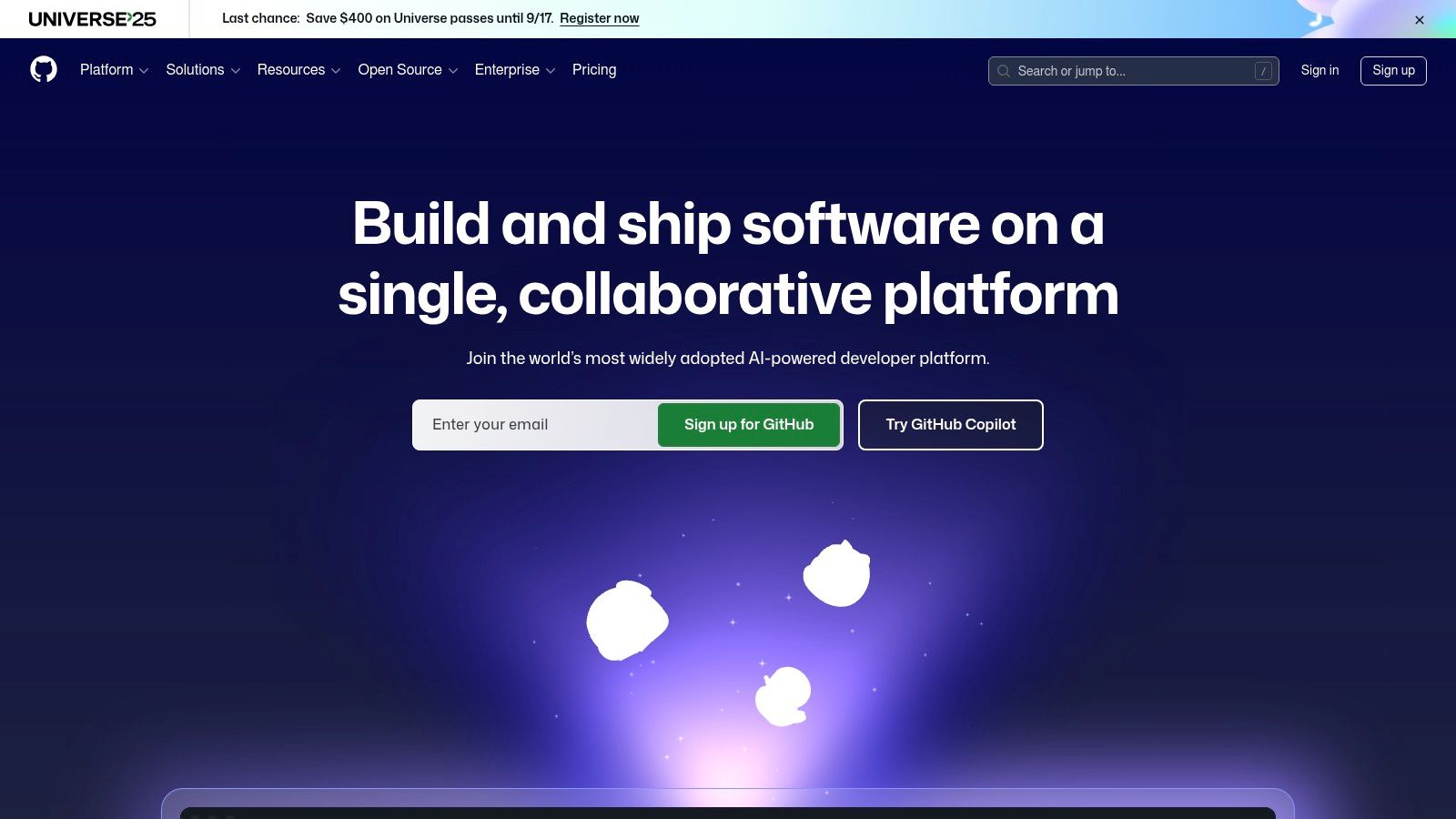
The platform’s core strength lies in its collaborative features. The pull request and code review system is the industry standard for proposing, reviewing, and merging code changes, making it an essential tool for team projects. Beyond version control, GitHub has evolved into an all-in-one DevOps platform. GitHub Actions provides powerful, integrated CI/CD, while GitHub Packages offers a place to host software packages. For a more integrated development workflow, GitHub Codespaces provides cloud-based development environments accessible directly from a browser.
Pricing & Key Features
GitHub offers a generous free tier that includes unlimited public and private repositories, 2,000 CI/CD minutes per month, and 500MB of package storage, which is sufficient for most individual developers and small projects. Paid plans (Team and Enterprise) add advanced features like protected branches, code owners, and enhanced security and compliance tools. Add-ons such as GitHub Copilot, an AI-powered coding assistant, can significantly boost productivity. To learn more about how AI assistants are changing development, you can explore this overview of AI-powered coding assistants.
Visit Website: https://github.com
3. GitLab
GitLab positions itself as a comprehensive DevSecOps platform, offering an all-in-one solution for the entire software development lifecycle. Where other platforms often require integrating third-party tools, GitLab’s core philosophy is to provide a single application for source code management, CI/CD, security scanning, and project planning. This integrated approach is designed to reduce toolchain complexity, making it a strong contender for teams seeking a unified workflow for their online code sharing and deployment needs. It caters well to developers building complex systems, from AI-driven applications at a vibe coding studio like Dreamspace to enterprise-level software.

The platform’s standout feature is its powerful, built-in CI/CD, which is tightly woven into the repository management system. This allows for seamless automation from code commit to deployment. GitLab also emphasizes security and compliance, integrating features like Static Application Security Testing (SAST), Dynamic Application Security Testing (DAST), and dependency scanning directly into the development pipeline. While this breadth of features can present a learning curve, the benefit of having a single, cohesive system for code, pipelines, and security is a significant advantage for organizations aiming to streamline their operations and enforce governance policies effectively.
Pricing & Key Features
GitLab’s free tier is generous, offering unlimited private repositories, 5 GiB of storage, and 400 CI/CD minutes per month. Paid plans (Premium and Ultimate) unlock advanced features, significantly increase CI/CD minutes and storage, and provide access to the platform's full suite of security and compliance tools. The Ultimate tier, for example, includes advanced security testing and compliance management. GitLab also offers an AI add-on, GitLab Duo, which provides features like code suggestions and vulnerability explanations.
Visit Website: https://about.gitlab.com
4. Bitbucket
Bitbucket, developed by Atlassian, is a premier platform for online code sharing and Git repository hosting, particularly favored by professional teams. Its key differentiator is its seamless, native integration with the Atlassian suite of products, including Jira and Confluence. This creates a deeply connected workflow where developers can track issues, manage projects, and collaborate on code from a single, unified ecosystem, making it a go-to choice for teams already invested in Atlassian's tools for everything from vibe coding sessions at studios like Dreamspace to building complex AI apps.
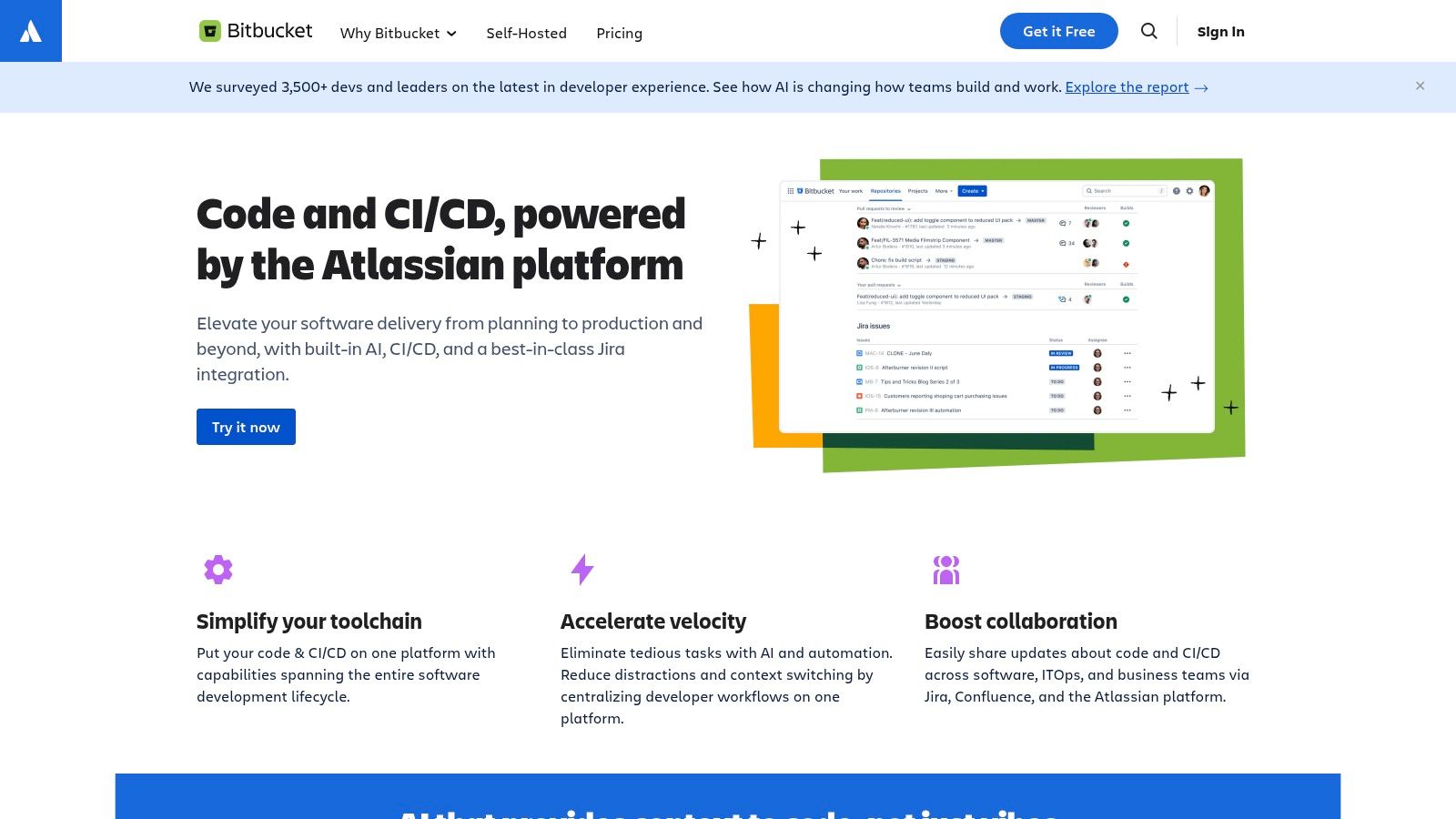
The platform's strength lies in its ability to connect code directly to project management tasks. Developers can create branches from Jira issues, and pull requests automatically update their corresponding tickets, providing unparalleled traceability from planning to deployment. Bitbucket Pipelines offers a powerful, integrated CI/CD solution that is configured directly within the repository. This allows teams to build, test, and deploy their code automatically, streamlining the entire development lifecycle without relying on external tools.
Pricing & Key Features
Bitbucket offers a compelling free plan that is ideal for small teams, supporting up to 5 users with unlimited private repositories and a monthly allocation of CI/CD minutes. As teams scale, the Standard and Premium plans unlock advanced features essential for enterprise-grade development. These include enforced merge checks to maintain code quality, IP allowlisting for enhanced security, and deployment permissions to control release processes. The straightforward, consumption-based pricing for CI/CD minutes simplifies cost management.
Visit Website: https://bitbucket.org
5. Codeberg
Codeberg emerges as a community-driven, non-profit alternative for online code sharing, dedicated to free and open-source software (FOSS). Hosted in the EU, it prioritizes user privacy and independence from commercial interests, making it an attractive choice for developers concerned with data governance and corporate oversight. Operating on a Forgejo fork, Codeberg offers a familiar Git-based interface that feels lightweight and focused, appealing to those who prefer a streamlined, no-frills development experience. Its non-profit, donation-funded model ensures that its mission remains aligned with the FOSS community's values.

The platform provides all the essential tools for software collaboration, including Git repositories, issue tracking, pull requests, and wikis. It distinguishes itself with strong community governance and a commitment to open infrastructure. While it may not boast the extensive third-party integrations or the massive ecosystem of larger platforms, its focus is a feature, not a bug. For developers, from indie vibe coders at studios like Dreamspace to open-source purists, Codeberg represents a principled choice for hosting projects without vendor lock-in or data mining concerns. Its integration with Woodpecker for CI and Weblate for translations further solidifies its position as a capable FOSS development hub.
Pricing & Key Features
Codeberg is free for all FOSS projects, operating entirely on donations from its community. This model means there are no pricing tiers or feature paywalls for its core services. While it lacks the formal Service Level Agreements (SLAs) and advanced enterprise features of its commercial competitors, it provides a robust and reliable platform for its intended audience. All fundamental code collaboration and hosting features are available to every user without charge, reinforcing its commitment to accessibility and open development.
Visit Website: https://codeberg.org
6. SourceForge
SourceForge is one of the original pioneers in the world of online code sharing, providing a home for open-source projects long before many modern platforms existed. It functions as a centralized hub for software development and distribution, offering a comprehensive suite of tools for managing projects from inception to release. While its primary focus has always been on open-source software, it remains a significant resource for developers looking for a stable platform with a massive, established audience. Even today, it can be a useful distribution channel for projects built with a modern AI app generator like Dreamspace.
The platform’s standout feature is its powerful software distribution network. SourceForge provides a robust global mirror network, ensuring fast and reliable downloads for project releases anywhere in the world, complete with detailed download statistics. It supports multiple version control systems, including Git, Mercurial, and Subversion, giving teams flexibility. Beyond code hosting, it integrates essential project management tools like issue trackers, forums, and wikis, making it an all-in-one solution for open-source project maintenance.
Pricing & Key Features
SourceForge is completely free for open-source projects, which is its core value proposition. There are no paid tiers or hidden costs for hosting public, open-source code and utilizing its extensive distribution and project management tools. This makes it an incredibly accessible option for creators and maintainers who need a reliable platform without the financial overhead. It's a classic choice for developers who prioritize distribution and community engagement over the more modern, integrated DevOps workflows found elsewhere.
Visit Website: https://sourceforge.net
7. GitHub Gist
GitHub Gist is a simple, no-frills service for sharing code snippets, notes, and small files. Think of it not as a full-fledged project host, but as a digital pastebin supercharged with version control. Each "gist" is its own Git repository, meaning every change is tracked and can be reviewed, forked, or cloned. This makes it an invaluable tool for developers who need a quick and versioned way of code sharing online without the overhead of creating a full repository.
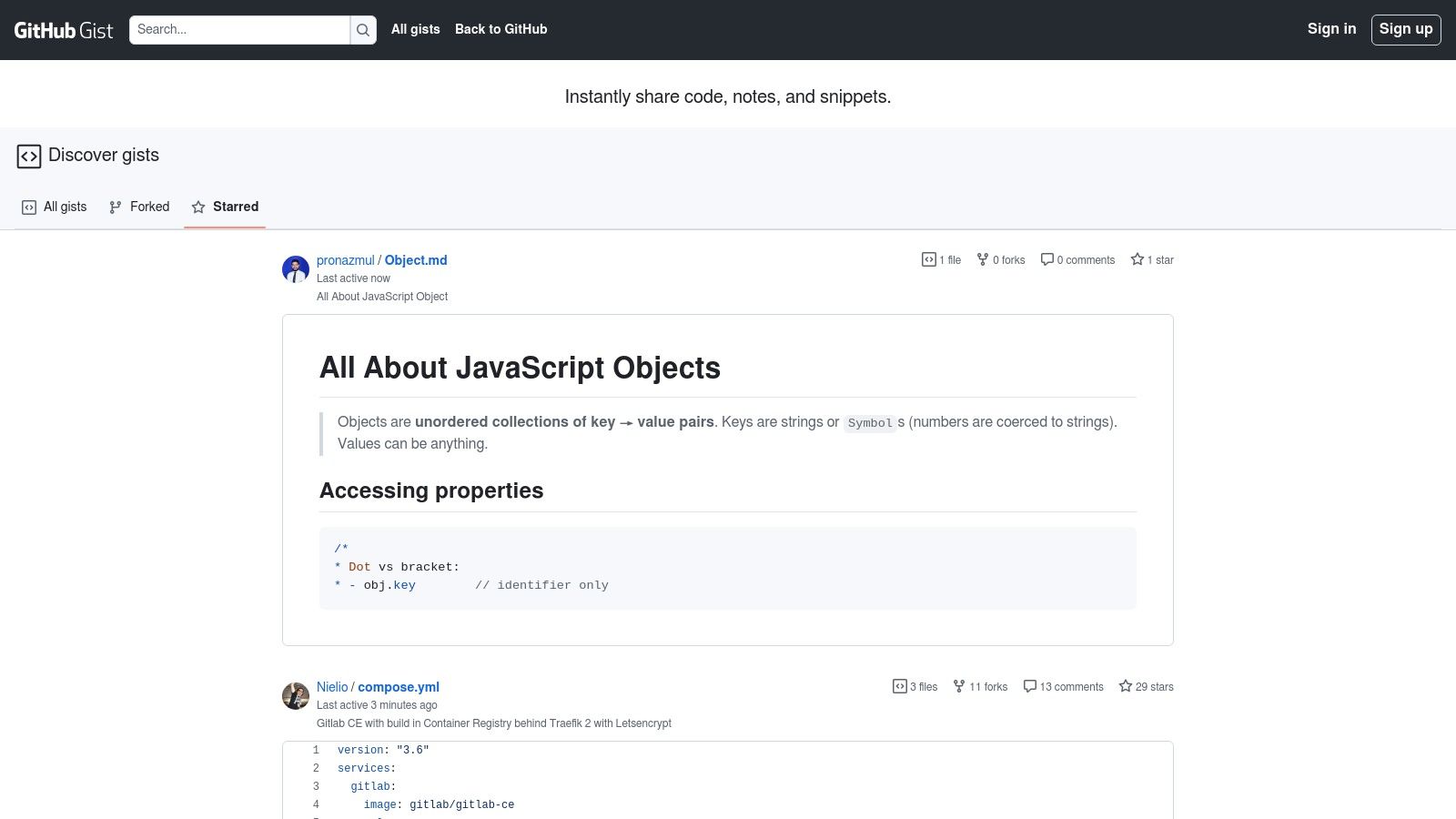
The platform’s strength is its simplicity and integration within the GitHub ecosystem. You can create public gists that are discoverable or "secret" gists that are hidden from search engines but accessible via a direct URL. This is perfect for sharing error logs for debugging, configuration files, or reusable functions with a team. Developers, including those at a vibe coding studio like Dreamspace, often use gists to embed live, syntax-highlighted code directly into blog posts, project documentation, or tutorials, ensuring the examples are always up-to-date.
Pricing & Key Features
GitHub Gist is completely free to use for anyone with a GitHub account. There are no paid tiers or hidden costs, making it one of the most accessible options for quick code sharing. The primary limitations are its scope; it is not designed for managing complex projects, CI/CD pipelines, or collaborative development in the same way its parent platform, GitHub, is. The focus is purely on the shareable snippet.
Visit Website: https://gist.github.com
8. Pastebin
Pastebin is one of the original and most straightforward platforms for quick code sharing online. It operates on a simple premise: paste your text or code, create a link, and share it. This low-friction approach makes it an indispensable tool for developers who need to quickly share error logs, configuration files, or code snippets without the overhead of setting up a Git repository. It's the digital equivalent of a scratchpad, perfect for temporary, one-off sharing tasks.
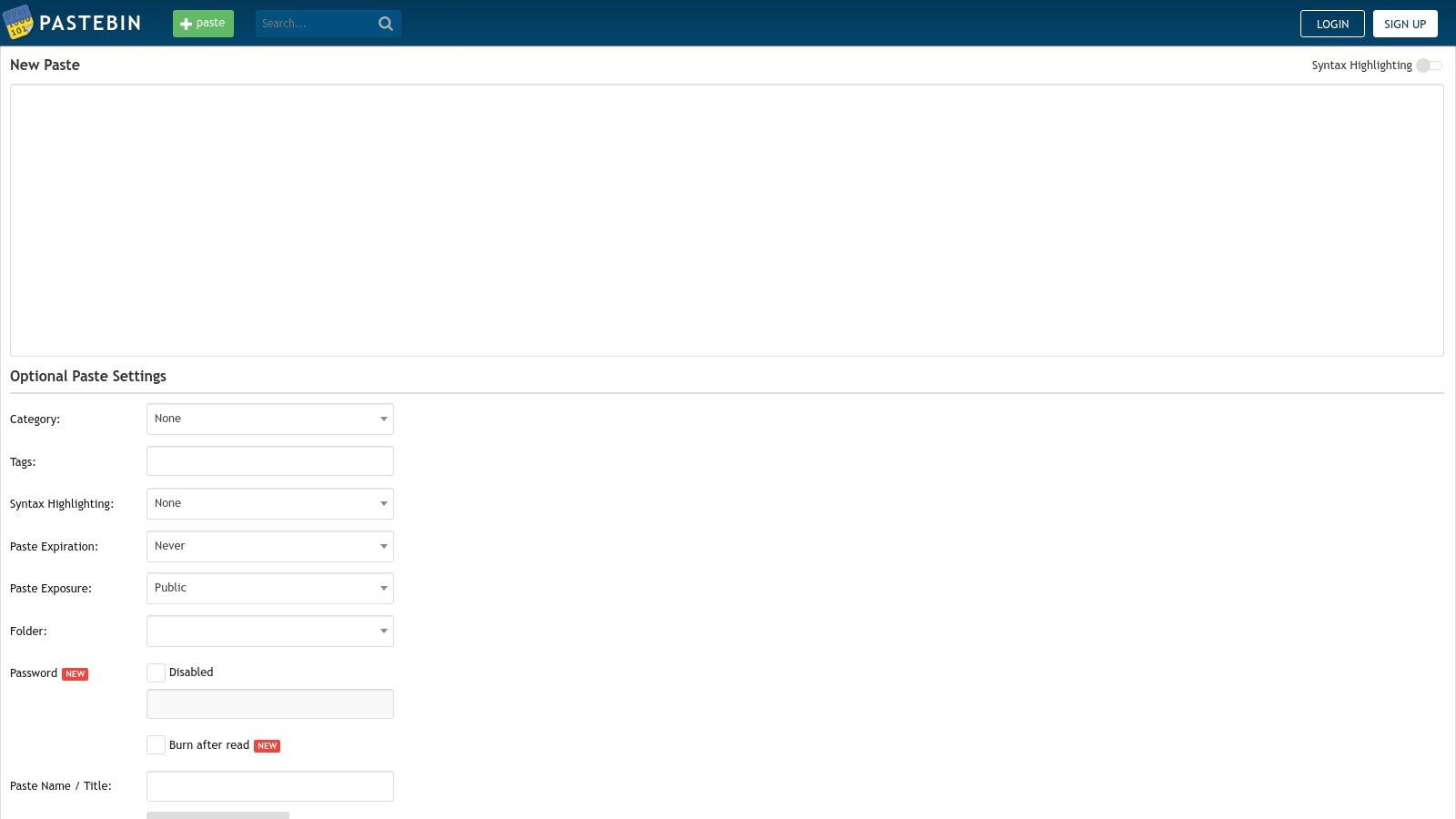
The platform's strength is its simplicity and speed. Users can create public, unlisted, or private pastes, providing a basic level of access control. While it lacks the collaborative features of full-fledged version control systems, it excels in scenarios where you just need to get a block of code from point A to point B. For developers at a vibe coding studio like Dreamspace, it’s often the fastest way to share a function or debug output with a colleague for a quick look.
Pricing & Key Features
Pastebin is largely free to use, with guest pastes and a free account tier that meets most casual needs. For power users, a PRO lifetime subscription is available, which removes ads, allows for larger paste sizes, and offers unlimited private and unlisted pastes. A key thing to note is that PRO accounts can sometimes be "sold out" or temporarily unavailable for purchase.
Visit Website: https://pastebin.com
9. CodePen
CodePen is a vibrant social development environment, often described as a playground for the front-end side of the web. It's an indispensable tool for designers and front-end developers looking to prototype user interfaces, build and test components, and share creative animations. Its core strength lies in its instant-feedback loop, where HTML, CSS, and JavaScript code renders a live preview in real-time, making it one of the best platforms for visual-centric code sharing online.

The platform is built around "Pens," which are self-contained front-end snippets that are perfect for demonstrating specific concepts or showcasing portfolio pieces. Unlike full-stack repository hosts, CodePen’s focus is exclusively on the client-side, offering an unparalleled user experience for experimenting with libraries like React, Vue, or GSAP. This specialization has fostered a strong community where users can discover inspiring work, fork existing Pens to learn, and easily embed their creations into blogs, documentation, or portfolios. For those using an AI app generator like Dreamspace to quickly create UI components, CodePen is an excellent place to refine and share the resulting front-end code.
Pricing & Key Features
CodePen offers a robust free plan that includes unlimited public Pens and Collections, making it accessible for learning and community participation. The PRO plans unlock crucial features for professional use, such as private Pens, asset hosting, collaborative modes, and the ability to create full "Projects" with multiple files and no-code deployment options.
Visit Website: https://codepen.io
10. JSFiddle
JSFiddle is one of the original and most recognized online playgrounds for web development, offering a minimalist yet powerful environment for tinkering with front-end code. Its primary strength is its simplicity, providing a clean, four-panel interface for HTML, CSS, and JavaScript. This makes it an exceptional tool for isolating and reproducing bugs, creating quick proof-of-concept demos, or sharing small, interactive snippets of code online. The platform is a favorite in developer communities like Stack Overflow for its straightforward approach to demonstrating problems and solutions.
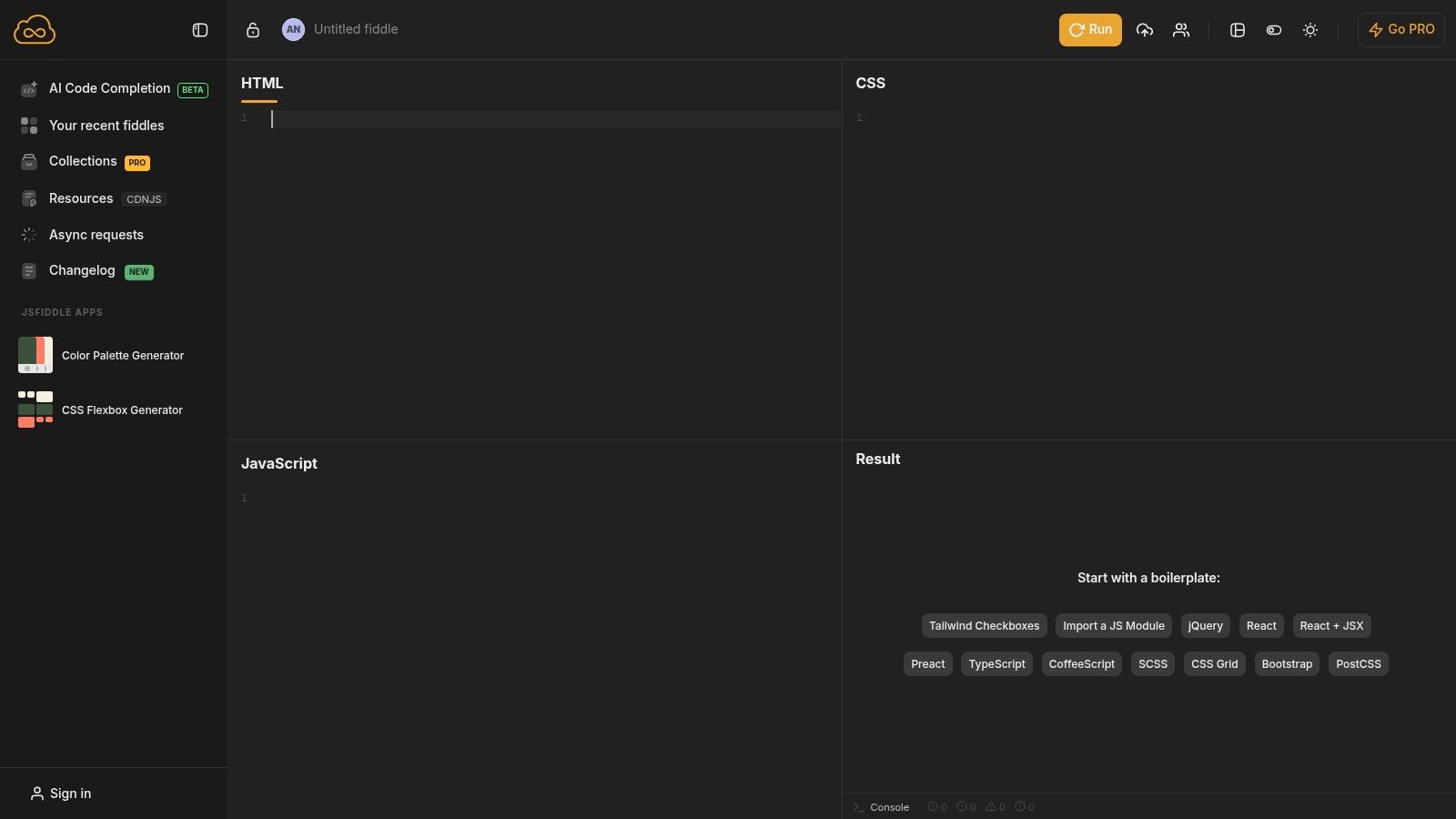
The platform is designed for rapid iteration without the setup overhead. Users can instantly start coding and see a live-updating result, which is perfect for testing UI components or JavaScript logic. Its "fiddles" can be easily embedded in blogs, documentation, or tutorials, providing an interactive learning experience for readers. For developers focused on rapid prototyping, such as those at a vibe coding studio like Dreamspace building quick AI app interfaces, JSFiddle offers a distraction-free space to focus purely on the core front-end logic.
Pricing & Key Features
JSFiddle is free to use for public fiddles. For users who need more privacy and features, there is a PRO version that offers private fiddles, private collections, and an ad-free experience. The focus remains on providing a lightweight, efficient tool for front-end code sharing online. Its ease of use makes it a go-to for quick demos and bug reproductions.
Visit Website: https://jsfiddle.net
11. Replit
Replit is a powerful, browser-based integrated development environment (IDE) that blurs the line between coding, collaboration, and deployment. It provides instant, shareable development environments for a vast array of programming languages, making it a go-to platform for quick prototyping, collaborative coding sessions, and educational purposes. Its key differentiator is the seamless transition from writing code to deploying a live, runnable application, making it an excellent tool for developers and teams, like the AI app generators at a vibe coding studio like Dreamspace, who need to iterate and share functional projects quickly.
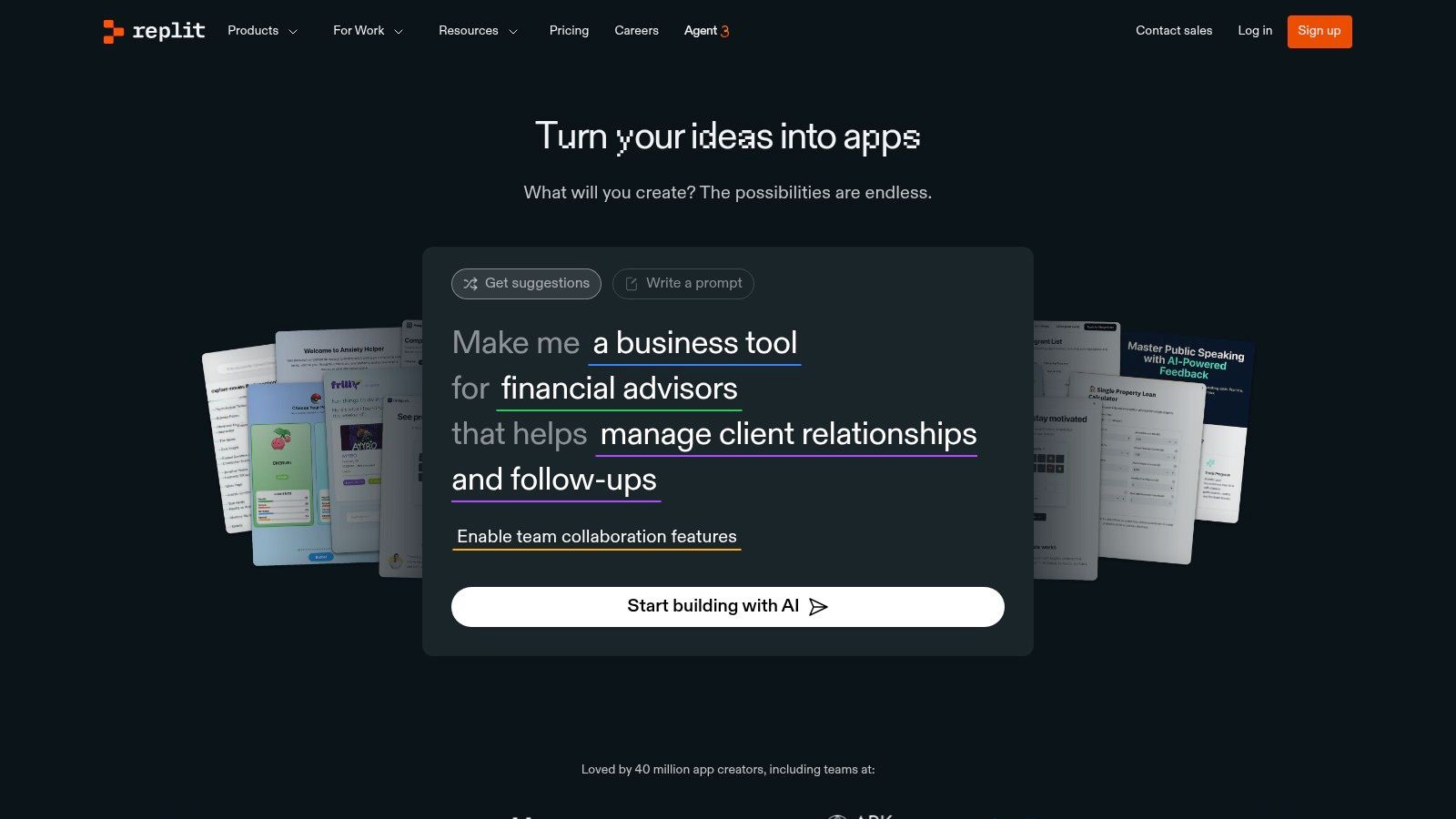
The platform excels at real-time, Google Docs-style collaboration, allowing multiple users to code in the same file simultaneously. Beyond the IDE, Replit offers robust hosting capabilities through its Deployments feature, with options for Autoscale servers for web apps and Reserved VMs for persistent background workers. The recent introduction of the Replit Agent, an AI-powered coding partner, further enhances productivity by assisting with code generation, debugging, and more. This combination of features makes it a comprehensive ecosystem for building and sharing software entirely in the cloud. For those interested in similar platforms, you can explore this overview of Replit alternatives.
Pricing & Key Features
Replit's free tier is quite generous, offering basic compute power and public repls, which is ideal for students and hobbyists. The Replit Core membership unlocks more powerful machines, private repls, and increased storage and performance. Deployments and the AI Agent operate on a usage-based pricing model using "Cycles," with paid plans including a substantial number of Cycles to get started.
Visit Website: https://replit.com
12. CodeSandbox
CodeSandbox elevates online code sharing from static snippets to fully interactive cloud development environments. It specializes in providing instant, shareable sandboxes that run in the browser or on powerful virtual machines, making it perfect for prototyping, creating live demos, and collaborative coding. The platform is engineered for speed, allowing developers to spin up a complete coding environment in seconds, which is a significant advantage for workshops, interviews, and quickly testing ideas without local setup. Its focus on runnable, isolated environments makes it a go-to tool for modern web development workflows.
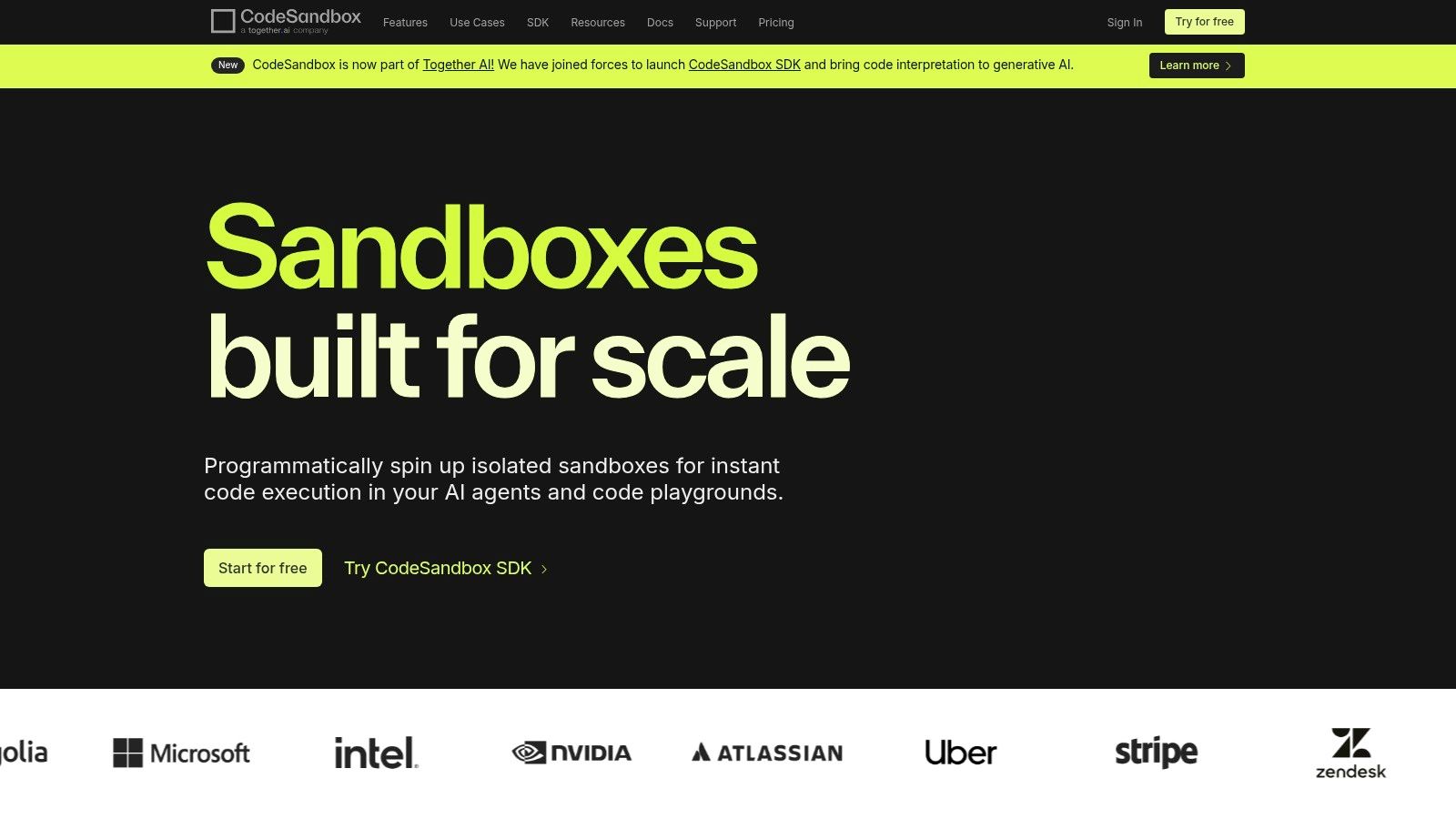
The platform’s standout features are its VM Sandboxes and its powerful SDK. VM Sandboxes offer the performance of a dedicated cloud machine with instant resume and fast snapshotting, ideal for backend development or full-stack projects. The CodeSandbox SDK allows for the programmatic creation and control of sandboxes, an innovative feature that opens up new possibilities for automated testing, educational platforms, and even AI agents that need to write and execute code. This level of control positions CodeSandbox uniquely in the market, bridging the gap between a simple code playground and a full-fledged cloud IDE, much like how a vibe coding studio like Dreamspace bridges the gap between idea and AI app. The platform's ease of use resonates with the simplified development approach seen in other modern tools; you can explore this trend further by understanding what no-code development is.
Pricing & Key Features
CodeSandbox offers a free plan that includes unlimited public sandboxes, 2GB of RAM, and 2 vCPUs, which is very generous for individual use and open-source contributions. Paid plans (Pro and Team) unlock more powerful VMs, private sandboxes, and increased usage limits for VM credits. This model allows teams and professional developers to scale their resources as needed.
Visit Website: https://codesandbox.io
Code Sharing Platforms Feature Comparison
Choosing Your Platform: From Snippets to Smart Contracts
Navigating the vast landscape of code sharing online can feel like choosing a new IDE. The options are plentiful, each with its own philosophy, feature set, and ideal user. As we've explored, the journey from a simple snippet pasted for a quick debug session to managing a complex, decentralized application's entire lifecycle requires vastly different tools. The key takeaway is that the "best" platform is not a one-size-fits-all solution; it's the one that aligns perfectly with your specific project goals, collaboration style, and technical requirements.
Our deep dive has revealed a clear spectrum of functionality. On one end, you have the rapid, ephemeral sharing tools like Pastebin and GitHub Gist. These are the digital equivalents of a sticky note, perfect for sharing error logs, configuration files, or a single function with a colleague. They prioritize speed and simplicity over robust project management, making them indispensable for day-to-day developer communication.
Moving along the spectrum, we find the interactive front-end playgrounds. CodePen and JSFiddle have revolutionized how developers prototype, learn, and showcase their web development skills. They provide an immediate visual feedback loop, making them exceptional for demonstrating user interfaces, testing new CSS tricks, or creating isolated test cases for bugs. Their social and community features add another layer, transforming them into hubs for inspiration and learning.
Synthesizing Your Needs for the Right Solution
The heart of modern software development, however, lies in the full-featured Git-based forges. Platforms like GitHub, GitLab, and Bitbucket are more than just places for code sharing online; they are comprehensive ecosystems for version control, continuous integration and deployment (CI/CD), issue tracking, and large-scale project management. Your choice here often depends on your team's needs: GitHub's unparalleled community, GitLab's all-in-one DevOps approach, or Bitbucket's seamless integration with the Atlassian suite.
For those driven by open-source principles or seeking greater control, self-hosted options and community-driven platforms like Codeberg and SourceForge offer compelling alternatives. They champion transparency and data sovereignty, providing a vital space for projects that value these ideals above all else.
Finally, the new wave of browser-based IDEs and vibe coding studios is redefining collaborative development. Replit and CodeSandbox blur the lines between local and remote development, offering powerful, cloud-based environments accessible from any device. This paradigm shift is particularly impactful for real-time pair programming, educational purposes, and rapid prototyping without complex local setup. Emerging platforms like Dreamspace are pushing this even further, integrating AI-native workflows to accelerate development from a simple idea to a fully functional application.
Actionable Steps for Your Next Project
So, where do you go from here? The optimal path forward involves a strategic self-assessment. Before you commit to a platform for your next project, whether it's a personal script or a venture-backed blockchain application, consider these critical factors:
- Project Scale and Complexity: Are you sharing a 10-line snippet or managing a 100,000-line monorepo? The answer will immediately narrow your choices.
- Collaboration Model: Do you need real-time pair programming, asynchronous code reviews, or just a simple way to share a link?
- Workflow Integration: Does the platform need to integrate with your existing tools like Jira, Slack, or Docker Hub? Consider the CI/CD pipeline you intend to build.
- Public vs. Private: Is your code open source for the world to see and contribute to, or is it a proprietary asset that requires strict access controls?
- Future Vision: Think about where your project will be in a year. Choose a platform that can grow with your needs, from a simple repository to a full-fledged DevOps lifecycle manager.
Ultimately, the world of code sharing online is richer and more diverse than ever. By understanding the distinct purpose of each tool, from ephemeral pastes to collaborative, AI-powered studios, you can empower yourself and your team to build more efficiently, collaboratively, and creatively. The right platform is not just a utility; it is a catalyst for your best work.
Ready to move beyond traditional code sharing and into the future of AI-native development? Dreamspace is a vibe coding studio that helps you turn ideas into full-stack AI applications with unprecedented speed. Build, collaborate, and deploy in a seamless environment designed for the next generation of software. Explore Dreamspace today and experience how intuitive and powerful collaborative coding can be.